zizia aurea
Golden Alexander - Zizia - Meadow Parsnip - Wild Parsley
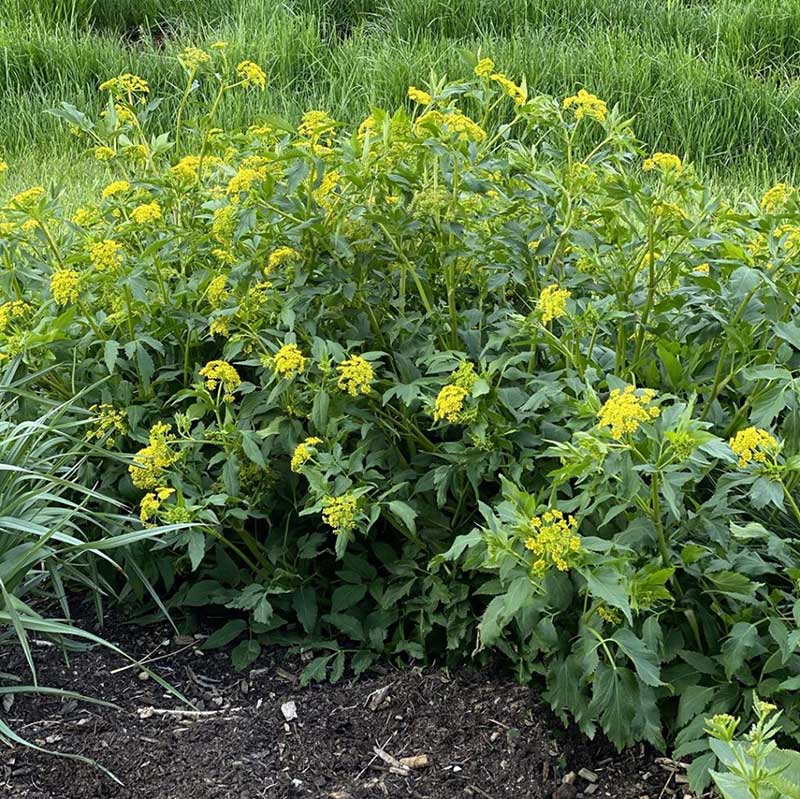
Zizia: A Resilient Early-Season Native for Illinois Landscapes
Zizia, commonly known as Golden Alexanders, is a hardy, upright perennial in the carrot family frequently stocked at our Mundelein nursery. For homeowners in Mettawa or Gages Lake looking to add early-spring yellow blooms and a food source for local butterflies to their garden beds, this plant is a functional choice. Its ability to grow in both full sun and partial shade and its resilience in damp soils make it a steady performer in any North Suburb garden where ecological value and seasonal transition are the primary goals.
Performance in Northern Illinois Soil
This perennial is hardy in our Zone 5b climate and is a representative selection for Midwest prairie restorations and woodland edges. While some ornamental flowers struggle with the heavy, moisture-retentive clay found throughout the region, zizia grows well in it, provided the site does not remain in standing water for extended periods. It is successful in the open, sun-drenched landscapes of Holiday Hills, where its root system can anchor firmly into the earth. In Mettawa, these plants act as a durable landscape staple, emerging with compound, serrated green leaves that remain present from early April until the first hard frost of autumn.
Size, Spacing, and Growth Habit
Planning for the mounded and upright nature of this plant ensures it provides a structured element in the early-season border without being overcrowded by later-blooming species:
-
Average Height: Depending on soil moisture and light levels, the flowering stems typically reach 1 to 3 feet tall.
-
Average Width: Each individual clump forms a sturdy, multi-stemmed footprint of 12 to 24 inches wide.
-
Spacing Requirements: To create a naturalized drift or a solid mass of color, space plants 18 inches apart. This allows the basal foliage to knit together while maintaining enough airflow to prevent fungal issues on the leaves.
Characteristics of Zizia
In the North Suburbs, this group of perennials serves as a source of early-summer color and wildlife support, addressing several specific gardening requirements:
-
Flat-Topped Flower Clusters: The plant produces small, yellow flowers arranged in compound umbels, similar in shape to Queen Anne's Lace. This characteristic is commonly utilized to provide a horizontal visual element in the spring landscape.
-
Host Plant for Black Swallowtails: It is a primary food source for the caterpillars of the Black Swallowtail butterfly. Providing this plant in a residential garden is a functional way to support the local pollinator life cycle.
-
Early Bloom Window: Blooming typically begins in May and continues into June, filling a gap in the garden when many spring bulbs have finished but summer perennials have not yet started.
-
Seed Head Interest: After the yellow flowers fade, the seed heads turn a purplish-bronze color, providing a secondary period of visual interest in the mid-summer garden.
Planting and Maintenance Advice
To ensure your plant remains healthy and returns with vigor each spring, follow these straightforward care steps:
-
Light Exposure: While it thrives in full sun, it is equally comfortable in partial shade. In our region, it often maintains the best foliage quality when it receives morning sun and is protected from the most intense afternoon heat of July.
-
Consistent Moisture: This plant prefers moist to average soil. During a July drought, regular supplemental irrigation is recommended to prevent the foliage from yellowing or going dormant prematurely.
-
Soil and Drainage: While it is adaptable to clay, it thrives in soil enriched with organic matter. In our heavy clay soil, amending the planting site with compost is a practical way to help the soil retain the moisture levels the plant prefers while allowing the roots to breathe.
-
Manage the Self-Seeding: This plant is a prolific seeder. If you wish to prevent it from colonizing a larger area, remove the flower heads after they fade but before the seeds drop. Alternatively, if you are establishing a native meadow, allowing it to self-seed will create a fuller, more naturalized appearance.
-
Minimal Fertilizer: It grows best in average to lean soil. Excessive nitrogen can result in rapid foliage growth at the expense of sturdy flower stems. A light top-dressing of compost in the spring is sufficient for its nutrient needs.
Frequently Asked Questions (Lake County Edition)
Is it related to Parsnip or Hemlock?
Yes, it is in the Apiaceae family. While it looks similar to some wild, toxic species, zizia is a safe, native ornamental. It is distinguished by the fact that the central flower of each small umbel is stalkless (sessile).
Why are there caterpillars on my plants?
These are likely the larvae of the Black Swallowtail butterfly. Since the plant is a host species, the caterpillars will eat some of the foliage before they pupate. This is a natural ecological process and does not typically harm the overall health of the plant.
Visit The Country Bumpkin Garden Center
We are located at the corner of Gilmer Rd & Hawley St in Mundelein. Stop by to see the growth habit of zizia in person and find the right fit for your sun-to-shade transition spots or native restoration projects. We are a local resource for gardeners across Mundelein, Gages Lake, and the surrounding communities.
Call (847) 566-2176 or Send a Message to check current availability.
See: Perennials
Category: Sun Perennials - Sun Plants - Sunny Plants - Zizia near me - Golden Alexander