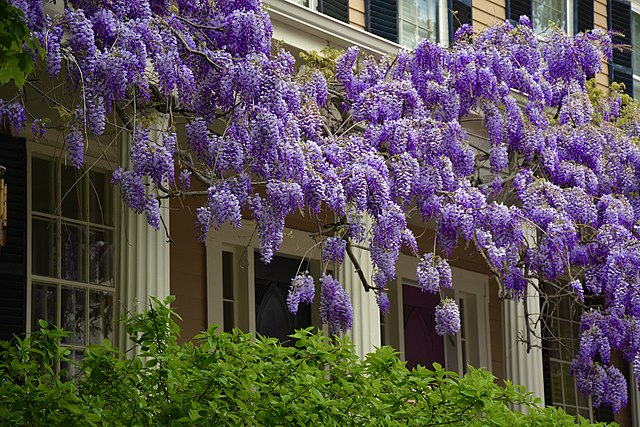
Wisteria

Wisteria Sinensis - Chinese Wisteria

Wisteria sinensis

Wisteria: A High-Climbing Woody Vine for Structural Garden Features

Wisteria sinensis, commonly known as Chinese wisteria, is a vigorous, deciduous woody vine frequently stocked at our Mundelein nursery. For homeowners in Long Grove or Lincolnshire looking to add cascading flower clusters and a sense of vertical scale to their pergolas or heavy-duty trellises, this plant is a functional choice. Its ability to grow rapidly and its production of pendulous blossoms make it a steady performer in any North Suburb garden where overhead shade and late-spring color are the primary goals.

Performance in Northern Illinois Soil

This vine is hardy in our Zone 5b climate and is a representative selection for large-scale Midwest landscapes. While some ornamental climbers struggle with the heavy, unyielding clay found throughout the region, wisteria grows well in it, provided the site is well-drained and the root system has sufficient space to expand. It is successful in the open, sun-drenched landscapes of Lincolnshire, where its thick, woody trunks can anchor firmly into the soil. In Long Grove, these plants act as a durable architectural staple, emerging with bronze-tinted new growth that matures into deep green pinnate leaves, remaining present from early spring until the first hard frost of autumn.

Size, Spacing, and Growth Habit

Planning for the expansive and heavy nature of this plant ensures it provides the intended overhead coverage without damaging the structures it inhabits:

  • Average Height: Depending on the support structure provided, the vine typically reaches 25 to 30 feet long. It is capable of climbing much higher if allowed to grow into mature trees.

  • Average Width: Each individual vine can spread to a footprint of 10 to 15 feet wide as it sends out lateral runners along a horizontal support.

  • Spacing Requirements: To cover a large pergola or fence line, space plants 10 to 15 feet apart. This allows the primary trunks to develop sufficient girth while the secondary branches knit together to form a canopy.

Characteristics of Wisteria

In the North Suburbs, this group of vines serves as a source of early-season color and structural support, addressing several specific gardening requirements:

  • Pendulous Flower Clusters: The plant produces drooping racemes of pea-like flowers—usually in shades of lavender, purple, or white—that open before the leaves fully emerge in May. This characteristic is commonly utilized to create high-impact visual displays on garden entrances.

  • Fragrance Production: The blossoms release a sweet, musky scent that can carry across a large portion of the yard, making it a functional choice for planting near patios or seating areas.

  • Rapid Growth Rate: Once the root system is established, the vine can produce several feet of new growth in a single season, providing quick coverage for privacy screens or sun-shading structures.

  • Twining Habit: The stems of Wisteria sinensis climb by twining in a counter-clockwise direction. This clockwise vs. counter-clockwise growth habit is a primary method used to distinguish Chinese varieties from Japanese ones.

Planting and Maintenance Advice

To ensure your plant remains healthy and produces a prolific amount of flowers each year, follow these straightforward care steps:

  • Full Sun Exposure: This is the most critical factor for flower production. To prevent the vine from focusing solely on foliage at the expense of buds, provide at least 6 to 8 hours of direct, unobstructed light daily.

  • Structural Support Requirements: Because of the immense weight of a mature vine, it must be grown on a sturdy, permanent structure such as a steel arbor, a heavy timber pergola, or a brick wall. Do not plant it against vinyl siding or lightweight lattice.

  • The "Two-Prune" System: Maintenance is necessary to manage the size and encourage blooming. Prune the long, whippy side shoots back to five or six buds in mid-summer, and then prune those same shoots back to two or three buds in late winter. This focuses the plant's energy on forming flower spurs rather than excess vine length.

  • Soil and Drainage: While it is adaptable to clay, it will not grow in stagnant, standing water. In our heavy clay soil, ensure the planting site is well-drained or slightly elevated to avoid root rot during wet spring months.

  • Root Management: The root system is extensive and powerful. Avoid planting wisteria too close to septic fields, underground pipes, or shallow foundations to prevent potential structural interference over time.

Frequently Asked Questions (Lake County Edition)

Why won't my wisteria bloom?

This is often caused by excessive nitrogen fertilizer, which encourages leaf growth over flowers, or improper pruning. Additionally, plants grown from seed can take 10 to 15 years to flower; the grafted or cutting-grown plants we carry reach maturity much faster.

Is it invasive?

While it is a vigorous grower that requires regular pruning to stay within bounds, it is not listed as a prohibited invasive species in Illinois. Consistent maintenance twice a year is sufficient to keep it contained in a residential landscape.

Visit The Country Bumpkin Garden Center

We are located at the corner of Gilmer Rd & Hawley St in Mundelein. Stop by to see the woody structure of wisteria in person and find the right fit for your heavy-duty arbors and pergolas. We are a local resource for gardeners across Mundelein, Lincolnshire, and the surrounding communities.

Call (847) 566-2176 or Send a Message to check current availability.

Category: Sun Perennials - Sun Plants - Sunny Plants - Wisteria near me