Trumpet Vine
Campsis Radicans - Trumpet Creeper - Foxglove Vine - Trumpet Vine
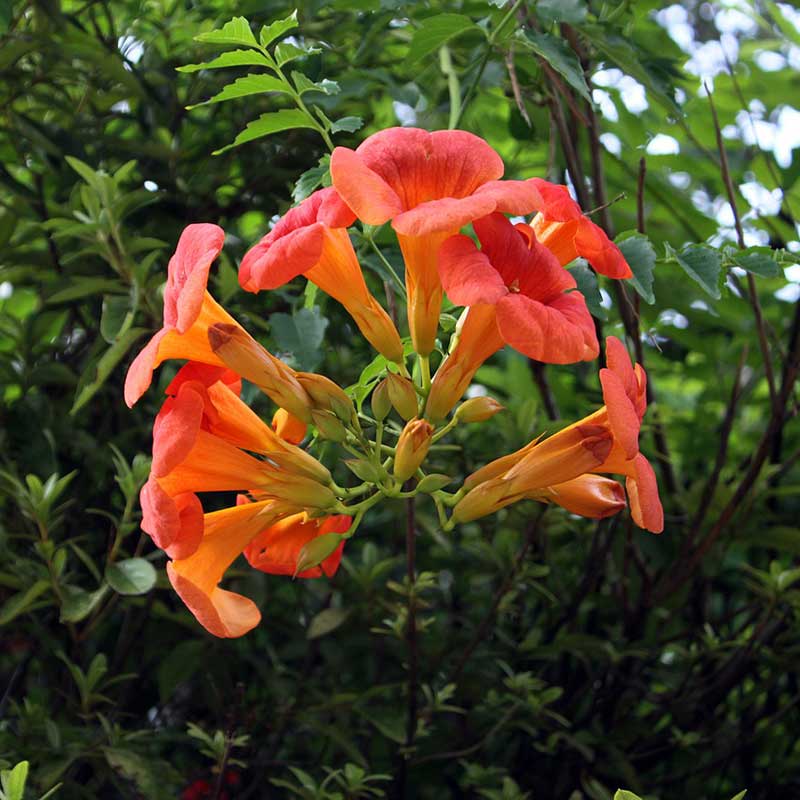
Trumpet Vine: High-Energy Vertical Color for Lake County
Campsis radicans, more commonly known as trumpet vine, is the most powerful native climber we offer at our Mundelein nursery. For homeowners in Long Grove or Mettawa looking to cover a sturdy fence, pergola, or arbor with a wall of tropical-looking foliage and brilliant orange flowers, this plant is an essential choice. Its sheer vigor and ability to thrive in tough conditions make it a premier performer in any large-scale Northern Illinois landscape.
Performance in Northern Illinois Soil
This woody vine is exceptionally hardy in our Zone 5b climate. While many ornamental climbers struggle with the heavy, compacted clay found throughout the region, a well-sited trumpet vine thrives in it. It is particularly successful in the wide-open, sunny spaces of Mettawa, where its extensive root system can anchor deeply into the soil. It is a plant that actually prefers "lean" soil; if the ground is too rich or over-fertilized, you will get plenty of green leaves but very few of the signature blossoms.
For the best results, plant it in full sun. To produce its maximum number of blooms, the vine needs at least 8 hours of direct light. In shaded yards, the growth remains aggressive, but the flower production will be sparse. Full sun also helps the woody stems "harden off" properly before the onset of a typical Lake County winter.
Why Trumpet Vine is a Practical Local Choice
In the North Suburbs, this vigorous climber serves as a high-impact screen and wildlife magnet, solving several specific gardening challenges:
-
The Ultimate Hummingbird Plant: The long, tubular flowers are perfectly designed for Ruby-throated Hummingbirds, making it the top choice for bird enthusiasts in Long Grove.
-
Rapid Privacy Screening: If you need to hide a chain-link fence or create a living wall for privacy, few plants can match the speed and density of a trumpet vine.
-
Erosion Control: Because of its aggressive rooting habit and ability to grow in poor soil, it is an excellent choice for stabilizing steep, sunny banks or slopes.
-
Extreme Weather Resilience: Once established, this vine is incredibly drought-tolerant and can handle the intense heat and wind of a suburban Illinois summer without wilting.
Planting and Maintenance Advice
To ensure your trumpet vine remains a beautiful asset and does not overwhelm your landscape, follow these straightforward care steps:
-
Provide Strong Support: This is not a plant for a flimsy plastic trellis. Use a heavy-duty wooden arbor, a stone wall, or a steel fence. The mature weight of a trumpet vine can easily collapse lightweight structures.
-
Pruning is Mandatory: To keep the vine in bounds and encourage more flowers, prune it back hard in early spring. You can cut it back to just a few buds from the main trunk to maintain a tidy shape in your Mettawa garden.
-
Manage Root Suckers: This plant spreads through underground runners. To prevent it from popping up in your lawn or nearby beds, pull or mow over any new shoots that emerge away from the main trunk.
-
Avoid Nitrogen Fertilizer: Never use high-nitrogen lawn fertilizer near the base of the vine. This will stimulate excessive leaf growth at the expense of those iconic orange and red trumpet-shaped flowers.
-
Monitor Attachment: The vine climbs using "aerial rootlets." While these are great for stone or brick, avoid letting the vine climb directly on wood siding or shingles, as the moisture trapped behind the stems can cause damage over time.
Reliable Companion Plants for our Area
To create a pleasant, multi-layered look in the garden, consider pairing Trumpet Vine with these specific varieties:
-
Ornamental Grasses (such as Switchgrass): The upright, airy texture of native grasses like Panicum provides a soft, structural contrast at the base of the heavy, woody Trumpet Vine. The golden tones of the grass in autumn beautifully complement the fading foliage of the vine.
-
Coneflowers (Echinacea): Since Trumpet Vine thrives in full sun, coneflowers are a natural match. Their bold, daisy-like shapes offer a sturdy floral contrast to the elongated, tubular "trumpets" of the vine, and both are magnets for local pollinators.
-
Russian Sage (Perovskia): The fine-textured, silvery foliage and misty lavender-blue spikes of Russian Sage create a cooling color balance against the fiery oranges and reds of the Trumpet Vine. This pairing is exceptionally drought-tolerant once established.
-
Catmint (Nepeta): Planting a vigorous catmint at the base of the vine helps to "mask" the woodier lower stems. The soft, mounded habit and long-blooming purple flowers provide a lush carpet of color that thrives in the same sunny conditions as the vine.
Frequently Asked Questions (Lake County Edition)
How long until it blooms?
While the vine grows fast, it can sometimes take 3 to 5 years of established growth before it begins to produce flowers. Patience is key when starting a young plant in your Mettawa yard.
Is it invasive?
While it is a native species, it is very aggressive. It stays "in its place" only if you are diligent about pruning and removing root suckers each season.
Visit The Country Bumpkin Garden Center
We are located at the corner of Gilmer Rd & Hawley St in Mundelein. Stop by to see the impressive growth of the trumpet vine and get expert advice on how to manage it in your own landscape. We are proud to be a local resource for gardeners across Mundelein, Long Grove, and the surrounding communities.
Call (847) 566-2176 or Send a Message to check current availability.
Varieties: Trumpet Vine Red.
See: Perennials
Category: Sun Perennials - Sun Plants - Sunny Plants - Trumpet vine near me - Campsis radicans