sweetfern
Sweetfern - Sweet Fern - Comptonia peregrina
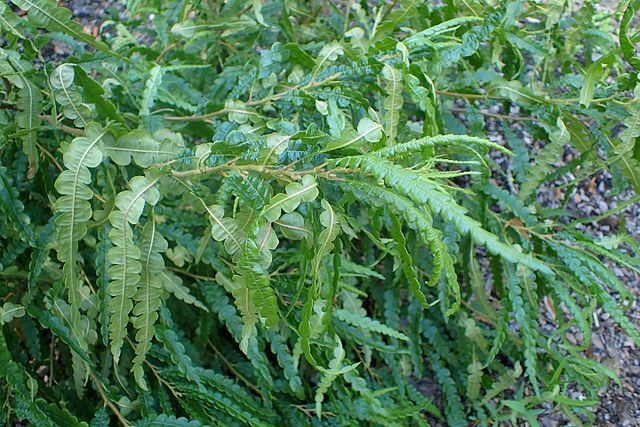
Sweetfern: A Fragrant Native Shrub for Poor and Sandy Soils
Sweetfern (Comptonia peregrina) is a unique, deciduous native shrub in the bayberry family available at our Mundelein nursery. For homeowners in Winnetka or Winthrop Harbor looking to add a resilient, aromatic woody plant to their difficult landscape spots, this species is a functional choice. Its ability to grow in nutrient-poor, sandy, or acidic soils and its distinctive fern-like foliage make it a steady performer in any North Suburb garden where soil stabilization and textural interest are the primary goals.
Performance in Northern Illinois Soil
This shrub is hardy in our Zone 5b climate and is a representative selection for Midwest pine barrens, rocky slopes, and roadside embankments. While some ornamental shrubs struggle with the heavy, unyielding clay found throughout the region, sweetfern grows well in it, provided the site is well-drained and the soil is not overly alkaline. It is successful in the sandy or gravelly landscapes of Winthrop Harbor, where its aggressive root system can anchor firmly and fix its own nitrogen. In Winnetka, these plants act as a durable structural staple, emerging with narrow, deeply lobed green leaves that resemble fern fronds but belong to a sturdy, woody shrub.
Size, Spacing, and Growth Habit
Planning for the mounded and colonizing nature of this shrub ensures it provides the intended ground coverage or structural mass without encroaching on formal perennial beds:
-
Average Height: Depending on the soil quality and light levels, the plant typically reaches 2 to 4 feet tall.
-
Average Width: Each individual plant forms a spreading footprint of 4 to 8 feet wide over time as it expands via underground rhizomes.
-
Spacing Requirements: To create a solid, low-maintenance thicket or a continuous erosion-control mat, space plants 3 to 4 feet apart. This allows the roots to interlock and the foliage to form a dense canopy that suppresses weeds and protects the soil surface.
Characteristics of Sweetfern
In the North Suburbs, this group of shrubs serves as a source of textural diversity and functional landscape support, addressing several specific gardening requirements:
-
Aromatic Foliage: The most notable trait of this plant is the scent of its leaves. When crushed or brushed against, the foliage releases a spicy, sweet aroma reminiscent of bayberries or hay. This characteristic is commonly utilized in sensory gardens or along pathways where the fragrance can be appreciated.
-
Fern-Like Appearance: Despite its name and appearance, it is not a true fern. It is a woody shrub that maintains its structure throughout the year. The long, narrow leaves provide a fine-textured look that contrasts well with broader-leaved shrubs.
-
Nitrogen-Fixing Ability: It possesses a symbiotic relationship with soil bacteria that allows it to convert atmospheric nitrogen into a form the plant can use. This makes it a functional choice for "reclaiming" sites with poor or exhausted soil.
-
Autumn Foliage Interest: In the fall, the dark green leaves transition to shades of yellow, orange, and bronze. The dried leaves often persist on the stems into early winter, providing a subtle rustling sound and visual texture during the colder months.
-
Wildlife Value: The shrub provides cover for small mammals and is a host plant for several species of moths, including the Grey Hairstreak butterfly.
Planting and Maintenance Advice
To ensure your shrub remains healthy and maintains its dense, spreading habit each year, follow these straightforward care steps:
-
Full Sun to Partial Shade: While it is adaptable to dappled light, full sun (at least 6 hours) is required to achieve the densest growth habit and the most vibrant autumn color.
-
Prioritize Drainage: Proper drainage is the most critical factor for success. While it is adaptable, the plant will not tolerate "wet feet" or stagnant water. It is a functional choice for slopes, raised beds, or sandy pockets where other shrubs might dry out.
-
Avoid Frequent Transplanting: Like many plants with deep, rhizomatous root systems, sweetfern can be sensitive to root disturbance once established. Selecting a permanent location during the initial planting phase is a practical necessity.
-
Minimal Pruning Needs: It naturally maintains a mounded, low-growing form and requires very little intervention. If pruning is required to remove winter-damaged tips or to contain its spread, it should be done in late winter or very early spring.
-
Soil pH Considerations: It prefers acidic to neutral soils. In the alkaline clay often found in Lake County, amending the planting site with peat moss, leaf mold, or elemental sulfur is a practical way to ensure the plant remains vigorous and maintains its dark green leaf color.
Frequently Asked Questions (Lake County Edition)
Is it actually a fern?
No. It is a deciduous woody shrub. It is called sweetfern because its leaves are deeply divided and lobed, giving them a visual appearance very similar to certain fern species, such as the wood fern.
Why is it spreading?
Spreading is the natural growth habit of this plant. It sends out underground runners to colonize open soil. This makes it an exceptional choice for covering large areas or stabilizing hillsides, but it should be given enough room to expand in a residential border.
Visit The Country Bumpkin Garden Center
We are located at the corner of Gilmer Rd & Hawley St in Mundelein. Stop by to see the unique texture and experience the fragrance of sweetfern in person and find the right fit for your sun-drenched or difficult-soil landscape. We are a local resource for gardeners across Mundelein, Winthrop Harbor, and the surrounding communities.
Call (847) 566-2176 or Send a Message to check current availability.
Image: Krzysztof Ziarnek, Kenraiz, CC BY-SA 4.0 <https://creativecommons.org/licenses/by-sa/4.0>, via Wikimedia Commons
See: Shrubs and Roses
Category: Shrubs and Roses. Sweetfern near me - Comptonia peregrina - full sun - part shade
Superior National Forest, CC BY 2.0