spiderwort
Tradescantia - Spiderwort
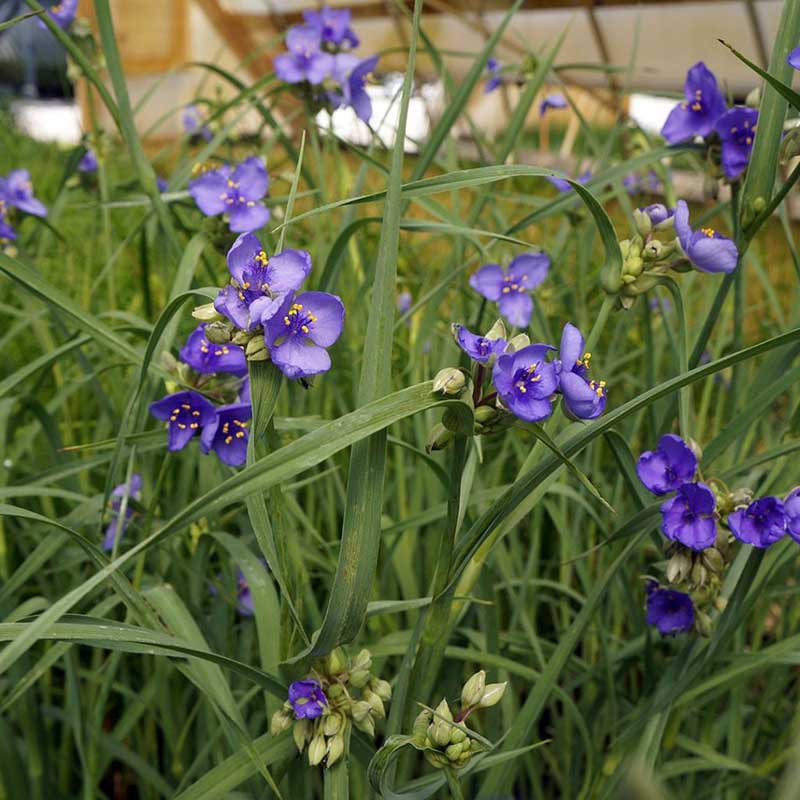
Spiderwort: A Durable Native Perennial for Variable Light Conditions
Spiderwort (Tradescantia), a hardy and distinctive member of the Commelinaceae family, is a versatile perennial frequently stocked at our Mundelein nursery. For homeowners in Beach Park or Bannockburn looking to add unique, three-petaled flowers and grass-like foliage to their garden borders, this plant is a functional choice. Its ability to grow in both sun and partial shade and its resilience in moist soils make it a steady performer in any North Suburb garden where consistent morning color and structural foliage are the primary goals.
Performance in Northern Illinois Soil
This perennial is hardy in our Zone 5b climate and is a reliable selection for Midwest landscapes ranging from prairie edges to woodland borders. While some ornamental flowers struggle with the heavy, moisture-retentive clay found throughout the region, spiderwort grows well in it, provided the site remains relatively moist. It is successful in the dappled or shaded landscapes of Bannockburn, where the soil stays cool during the heat of the summer. In Beach Park, these plants act as a durable landscape staple, emerging with long, arching leaves that remain present from early spring until the first hard frost of autumn.
Size, Spacing, and Growth Habit
Planning for the mounded and upright nature of this plant ensures it provides a structural element without being overcrowded by more aggressive groundcovers:
-
Average Height: Depending on the cultivar and light levels, the plant typically reaches 18 to 24 inches tall.
-
Average Width: Each individual clump forms a sturdy, multi-stemmed footprint of 12 to 18 inches wide.
-
Spacing Requirements: To create a solid drift of color or a continuous border, space plants 15 to 18 inches apart. This allows the foliage to expand while maintaining enough airflow to prevent fungal issues like powdery mildew.
Characteristics of Spiderwort
In the North Suburbs, this group of perennials serves as a source of early-to-mid summer color and wildlife support, addressing several specific gardening requirements:
-
Unique Blooming Cycle: The flowers—appearing in shades of deep blue, purple, pink, or white—open in the morning and typically close by the afternoon in bright sun. This characteristic is commonly observed during the peak of the summer heat.
-
Pollinator Support: The nectar-rich blossoms are a food source for bumblebees and other native bees, which are effective at "buzz pollination" for this specific flower shape.
-
Foliage Structure: The long, blade-like leaves provide a vertical, grass-like texture that contrasts well with broader-leaved perennials like Hostas or Coral Bells.
-
Drought and Moisture Tolerance: While it prefers consistent moisture, it is adaptable to the variable weather of Lake County, handling both wet springs and the occasional dry spells of late summer once the root system is established.
Planting and Maintenance Advice
To ensure your plant remains healthy and returns with vigor each spring, follow these straightforward care steps:
-
Light Exposure: This plant is adaptable to full sun or partial shade. In our region, it often maintains the best foliage quality in partial shade, where the leaves are less likely to "scorch" or turn yellow during the intense afternoon sun of July.
-
The "Mid-Summer Cut": A specific maintenance trait of spiderwort is that the foliage can become "leggy" or unattractive after the primary bloom cycle finishes in late June. Cutting the entire plant back to about 6 inches will encourage a fresh flush of green leaves and often a secondary round of flowers in the autumn.
-
Soil and Drainage: While it is adaptable to clay, it thrives in soil enriched with organic matter. In our heavy clay soil, amending the planting site with compost is recommended to help the soil retain the moisture levels this plant prefers.
-
Managing Self-Seeding: Some native species can be prolific seeders. If you wish to prevent the plant from colonizing a larger area, remove the flower heads before they have a chance to drop seeds. Alternatively, many modern cultivars are less aggressive.
-
Dividing the Clumps: Every 3 to 4 years, dig up the clump in early spring or late autumn to divide it. This rejuvenation prevents the center of the plant from becoming hollow and allows you to expand the display to other parts of your yard.
Frequently Asked Questions (Lake County Edition)
Why did the flowers disappear in the afternoon?
This is a natural trait of the plant. The individual blooms last only one day and close up as the sun gets higher and the temperature rises. However, the plant produces an abundance of buds, ensuring a fresh set of flowers every morning.
Is it invasive?
While some native species can spread through rhizomes and seeds, most garden cultivars remain in tidy clumps. If you are concerned about spreading, the "mid-summer cut" mentioned above will prevent seed production.
Visit The Country Bumpkin Garden Center
We are located at the corner of Gilmer Rd & Hawley St in Mundelein. Stop by to see the various cultivars of spiderwort in person—including the vibrant purple 'Concord Grape' or the gold-leaved 'Sweet Kate'—and find the right fit for your landscape. We are a local resource for gardeners across Mundelein, Bannockburn, and the surrounding communities.
Call (847) 566-2176 or Send a Message to check current availability.
Varieties: Concord Grape, Zwanenburg.
Image: Common Spiderwort.
See: Perennials
Category: Sun Perennials - Sun Plants - Sunny Plants - Spiderwort near me - Tradescantia