red raspberry heritage
Rubus Raspberry 'Heritage'
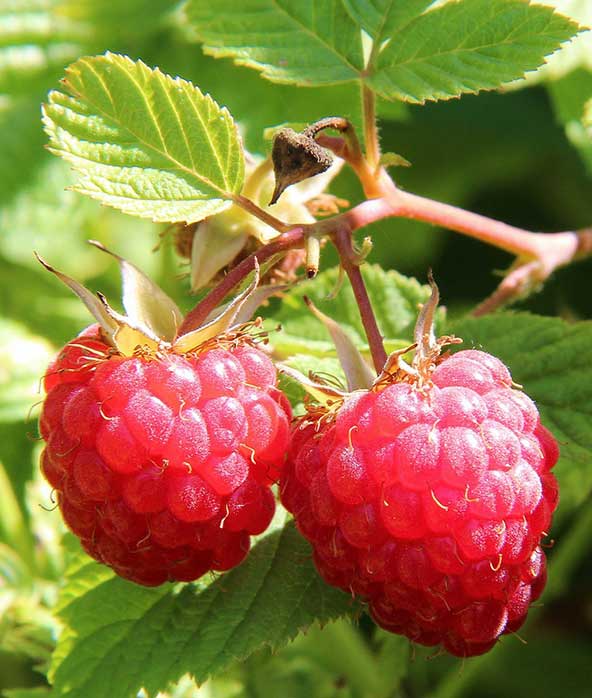
Heritage Raspberry: The Timeless Everbearing Standard for Illinois
Heritage raspberry (Rubus idaeus 'Heritage'), a deciduous fruiting shrub in the Rosaceae family, is a staple for Midwest edible landscapes available at our Mundelein nursery. Released by Cornell University in 1969, it remains the most popular everbearing variety in the country due to its exceptional cane strength and fruit quality. For homeowners in Mundelein or Libertyville looking to add a reliable source of classic red fruit and a vigorous architectural presence to their properties, this plant is a practical choice. Its ability to produce two distinct crops each year and its upright, self-supporting habit make it a steady performer in any North Suburb garden where functional food production and reliability are the primary goals.
Performance in Northern Illinois Soil
This cultivar is hardy in our Zone 5b climate and is a representative selection for residential berry patches throughout the region. While many brambles struggle with the heavy, unyielding clay found throughout Lake County, the Heritage raspberry grows well in it, provided the site is amended with organic matter to improve drainage and prevent "wet feet." It is successful in the open, sun-drenched landscapes of Libertyville, where its root system can anchor firmly in rich, mulched soil. In Mundelein, these canes act as a durable architectural staple, emerging with textured, dark green leaves in the spring that provide a lush, productive screen throughout the summer months.
Size, Spacing, and Growth Habit
Planning for the mature dimensions and upright nature of these canes ensures they provide the intended fruit yield without becoming unmanageable:
-
Average Height: The canes typically reach 5 to 6 feet tall at maturity.
-
Average Width: A single plant will spread via underground runners to fill its allotted space, commonly forming a dense, productive row.
-
Growth Rate: It features a fast growth rate, producing new "primocanes" from the base each spring that are capable of fruiting in their first year.
-
Growth Habit: This is an upright, vigorous shrub. Unlike many older varieties, Heritage is commonly sturdy enough to grow without a complex trellis system, though some support is practical for the heaviest harvests.
-
Spacing Requirements: To ensure proper light penetration and airflow—which is essential for fruit ripening—space individual plants 2 to 3 feet apart. This distance is commonly utilized to create a functional, easy-to-harvest berry row.
Pollination and Compatibility
Understanding the reproductive requirements of the Heritage raspberry is a key step for a successful harvest, especially for gardeners with limited square footage.
-
Self-Fertility: Heritage is self-fertile, meaning a single plant can produce fruit without the need for a second variety. This is a practical advantage for homeowners with small garden beds.
-
The Pollination Process: Pollen is transferred between the numerous small flowers by bees and other beneficial insects. This process is a standard requirement for the development of large, well-formed berries.
-
Pollinator Support: The white flowers are commonly visited by native pollinators, making these canes a functional addition to a wildlife-friendly landscape.
-
Extended Window: Because it is an everbearing variety, it provides a longer nectar window for pollinators compared to summer-only types.
Characteristics of Heritage Raspberries
In the North Suburbs, this fruiting shrub serves as a source of multi-seasonal interest and functional landscape support, addressing several specific gardening requirements:
-
Harvest Timing: As an everbearing variety, it produces two crops. The first crop appears on last year's wood in mid-summer, followed by a second, typically larger crop on the new wood starting in late August and continuing until the first hard frost.
-
Fruit Quality: The fruit is noted for its medium size, bright red color, and classic, full-bodied raspberry flavor. This characteristic is commonly utilized for fresh eating, freezing, and making jams.
-
Texture: The berries are firm and hold their shape well after picking, which is a practical benefit for those who wish to store or transport their harvest.
-
Disease Resistance: This variety is commonly recognized for its resistance to most common raspberry diseases, making it a low-maintenance choice for the home grower.
-
Cold Resilience: Heritage is famous for its winter hardiness, making it perfectly suited for the fluctuating winter temperatures of Lake County.
Planting and Maintenance Advice
To ensure your canes remain healthy and produce a prolific amount of fruit each year, follow these straightforward care steps:
-
Full Sun Exposure: This is a primary requirement for fruit development and sugar accumulation. Heritage raspberry requires at least 6 to 8 hours of direct, unobstructed sunlight daily.
-
Pruning for Production: Pruning is a functional necessity for raspberries. For a double crop, remove only the canes that have finished fruiting in the summer. For a single, massive fall crop, many gardeners choose to cut all canes to the ground in late winter.
-
Soil and Moisture: These plants require consistent moisture during the fruiting season. Regular supplemental irrigation during dry spells in July and August is a practical maintenance step.
-
Mulching: Maintain a 3-inch layer of organic mulch around the root zone, keeping it several inches away from the base of the canes. This is a practical step to retain moisture and suppress weeds.
-
Sanitation: Removing old canes after they have finished their two-year cycle is a practical strategy to keep the patch tidy and prevent disease buildup.
Frequently Asked Questions (Lake County Edition)
Why is Heritage called an "everbearing" raspberry?
It is commonly called everbearing because it has the ability to produce fruit on both one-year-old wood (floricanes) in the summer and new wood (primocanes) in the fall.
Do I need a trellis for Heritage raspberries?
While Heritage is one of the most self-supporting varieties, a simple wire or post system is commonly utilized to keep the heavy fall crop from leaning over and to keep the berries off the ground.
Visit The Country Bumpkin Garden Center
We are located at the corner of Gilmer Rd & Hawley St in Mundelein. Stop by to see the sturdy structure and experience the potential of Heritage raspberry for your own backyard orchard and find the right fit for your landscape. We are a local resource for gardeners across Mundelein, Libertyville, and the surrounding communities.
Call (847) 566-2176 or Send a Message to check current availability.
Category: Fruit Plants - Red Raspberry Heritage near me - Rubus Idaeus Heritage