rainier yellow cherry
Prunus Avium 'Rainier'
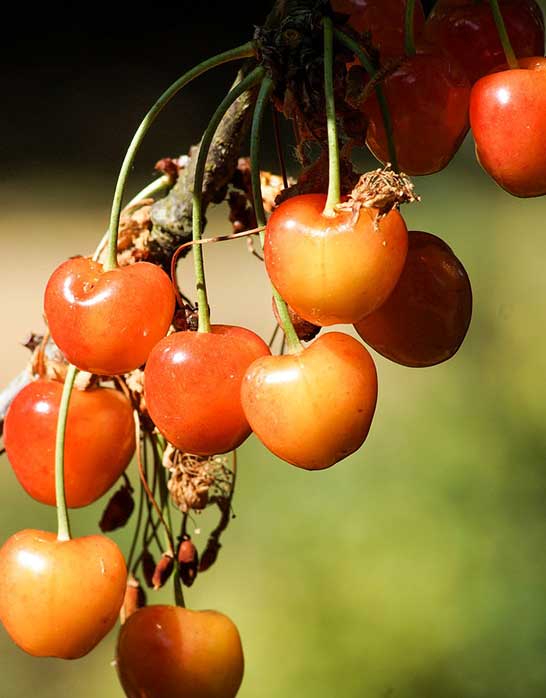
Rainier Yellow Cherry: A Premium Sweet Fruit Tree for Illinois Orchards
Rainier yellow cherry (Prunus avium 'Rainier'), a deciduous fruit tree in the Rosaceae family, is a foundational element for Midwest home orchards available at our Mundelein nursery. Developed at Washington State University in 1952, this variety was created by cross-breeding the 'Bing' and 'Van' cherry cultivars. For homeowners in Deerfield or Lincolnshire looking to add a reliable source of sweet, bicolored fruit and a sturdy architectural presence to their properties, this cultivar is a functional choice. Its ability to produce high-density, yellow-fleshed cherries and its resilience in Zone 5 climates make it a steady performer in any North Suburb garden where functional edible landscaping and seasonal transitions are the primary goals.
Performance in Northern Illinois Soil
This cultivar is hardy in our Zone 5b climate and is a representative selection for residential backyard orchards throughout the region. While many stone fruits struggle with the heavy, unyielding clay and variable moisture levels found throughout Lake County, the Rainier yellow cherry grows well in it, provided the site is well-drained and the soil is amended with organic matter to improve aeration. It is successful in the open, sun-drenched landscapes of Lincolnshire, where its root system can anchor firmly in rich, mulched soil. In Deerfield, these trees act as a durable architectural staple, emerging with oval, serrated green leaves in the spring that provide a lush, textured canopy throughout the summer months.
Size, Spacing, and Growth Habit
Planning for the mature dimensions and branching nature of this tree ensures it provides the intended fruit yield without requiring excessive maintenance or being easily crowded out by larger canopy trees:
-
Standard Varieties: Can reach 20 to 25 feet tall and 20 to 25 feet wide at maturity, providing a substantial structural presence and significant shade for a residential lot.
-
Semi-Dwarf Varieties: Typically reach 12 to 15 feet tall and 12 to 15 feet wide, making them a manageable choice for residential yards and easier to prune or harvest without specialized equipment.
-
Dwarf Varieties: Often reach 8 to 10 feet tall and 8 to 10 feet wide, ideal for smaller suburban lots or high-density planting along property lines.
-
Growth Habit: This tree features an upright, spreading habit that naturally develops a rounded crown. It is a vigorous grower that produces fruit on spurs that develop on wood that is at least two years old.
-
Spacing Requirements: To ensure proper light penetration and airflow—which is a mechanical necessity for fruit ripening—space trees according to their mature width. For semi-dwarf specimens, a distance of 15 feet between trunks is commonly utilized to achieve a productive orchard layout.
Pollination and Compatibility
Understanding the reproductive requirements of the Rainier yellow cherry is a mechanical necessity for a successful harvest, especially given the specific bloom windows in Northern Illinois.
-
The Pollination Process: The Rainier cultivar is self-sterile, meaning it cannot produce fruit using its own pollen. For fruit to develop, pollen from a genetically different sweet cherry variety must be transferred to the Rainier blossoms by bees and other insects. This cross-pollination is a functional requirement for the fertilization of the flowers and the subsequent development of fruit.
-
Compatible Pollinator Plants: To ensure a reliable crop, you must plant a second sweet cherry variety that blooms at the same time. The Rainier yellow cherry is an early-to-mid-season bloomer. Compatible pollinators commonly include varieties such as 'Bing', 'Black Tartarian', 'Stella', 'Lapins', or 'Montmorency'.
-
Pollination Synergy: Because this variety is a prolific bloomer, it is a functional strategy to plant it alongside varieties like 'Bing' to ensure both trees reach their maximum yield potential through effective cross-pollination.
Characteristics of Rainier Cherries
In the North Suburbs, this fruit tree serves as a source of early-summer interest and functional landscape support, addressing several specific gardening requirements:
-
Harvest Timing: Rainier cherries are a mid-season variety. In our Illinois climate, they are commonly harvested in late June or early July. They provide a fresh fruit source during the peak transition from spring to summer.
-
Fruit Quality: The fruit is noted for its large size and distinctive golden-yellow skin with a bright red blush. The flesh is clear-to-creamy yellow, exceptionally sweet, and firm. This characteristic is commonly utilized for fresh eating, preserves, and garnishing desserts.
-
Spring Floral Display: In May, the tree produces a prolific display of white blossoms. This adds a temporary but high-impact ornamental element to the spring landscape during the transition from early to late spring.
-
Pollinator Support: The spring flowers provide a critical early-season nectar and pollen source for local honeybees and native solitary bees as they emerge.
-
Bird Attraction: Because the fruit is yellow, it is commonly less targeted by birds than dark red varieties, though using bird netting as the red blush develops is still a practical maintenance step to protect the harvest.
Planting and Maintenance Advice
To ensure your tree remains healthy and produces a prolific amount of fruit each year, follow these straightforward care steps:
-
Full Sun Exposure: This is a mechanical necessity for fruit development and sugar accumulation. Rainier yellow cherry requires at least 6 to 8 hours of direct, unobstructed sunlight daily. Sunlight is also essential for the development of the red blush on the skin.
-
Pruning for Structure: Annual dormant pruning in late winter is a functional necessity. Removing crossing branches and thinning the interior of the canopy allows sunlight and air to reach the center of the tree, which is critical for ripening the fruit and reducing fungal pressure like leaf spot.
-
Soil and Moisture: While adaptable to clay, the tree requires consistent moisture, especially during the fruit-set period in early summer. During the dry weeks of August, regular supplemental irrigation at the base of the tree is a practical maintenance step.
-
Mulching: Maintain a 3-inch layer of organic mulch around the root zone, keeping it several inches away from the trunk. This is a mechanical necessity to retain moisture and regulate soil temperature.
-
Sanitation: Removing fallen fruit and leaves from the orchard floor is a functional strategy to minimize the overwintering of pests and diseases.
Frequently Asked Questions (Lake County Edition)
How long until my Rainier tree produces fruit?
Depending on the age of the tree at planting, semi-dwarf varieties typically begin to bear fruit in 4 to 6 years. Dwarf varieties may produce sooner, often within 2 to 3 years.
Is the Rainier cherry good for freezing?
Yes. Because of its firm texture and high sugar content, the Rainier is a functional choice for freezing. Slicing and freezing the fruit is a practical way to preserve the harvest for winter smoothies or baking.
Visit The Country Bumpkin Garden Center
We are located at the corner of Gilmer Rd & Hawley St in Mundelein. Stop by to see the sturdy structure and experience the potential of a Rainier yellow cherry for your own backyard orchard and find the right fit for your landscape. We are a local resource for gardeners across Mundelein, Deerfield, Lincolnshire, and the surrounding communities.
Call (847) 566-2176 or Send a Message to check current availability.
Category: Fruit Plants - Rainier Yellow Cherry trees near me - Prunus Avium 'Rainier'