physocarpus opulifolius
Physocarpus Ninebark - Nine Bark
Physocarpus Ninebark: A Resilient Native Shrub for Multi-Seasonal Interest
Physocarpus ninebark, a deciduous native shrub in the Rosaceae family, is a durable woody plant available at our Mundelein nursery. For homeowners in Riverwoods or Round Lake looking to add substantial color and a distinct, architectural presence to their properties, this genus is a functional choice. Its ability to thrive in various soil types and its dramatic bark and foliage transitions make it a steady performer in any North Suburb garden where reliability and ecological utility are the primary goals.
Performance in Northern Illinois Soil
This genus is hardy in our Zone 5b climate and is a representative selection for Midwest residential borders, embankments, and naturalized thickets. While many ornamental shrubs struggle with the heavy, unyielding clay found throughout the region, Physocarpus ninebark grows well in it, demonstrating a particular tolerance for the alkalinity and drainage challenges typical of Lake County. It is successful in the open, often wind-swept landscapes of Round Lake, where its deep root system can anchor firmly to support its mounded, multi-stemmed frame. In Riverwoods, these plants act as a durable architectural staple, emerging with clean, lobed leaves in the spring that provide a lush, opaque screen throughout the growing season.
Size, Spacing, and Growth Habit
Planning for the mature dimensions of these shrubs ensures they provide the intended visual mass without requiring excessive pruning or encroaching on neighboring structures:
-
Standard Varieties (e.g., 'Diabolo'): These typically reach 8 to 10 feet tall and 8 to 10 feet wide, often featuring an upright, arching habit.
-
Intermediate Varieties (e.g., 'Summer Wine'): These typically reach 5 to 6 feet tall and 5 to 6 feet wide, developing a compact, mounded silhouette.
-
Dwarf Varieties (e.g., 'Tiny Wine'): These stay between 3 to 4 feet tall and 3 to 4 feet wide, making them suitable for foundation plantings.
-
Spacing Requirements: To create a solid privacy screen or a continuous garden border, space plants 4 to 6 feet apart from center to center. For smaller varieties, spacing of 3 feet is commonly utilized to achieve a dense, interlocking canopy.
Characteristics of Ninebark
In the North Suburbs, this group of shrubs serves as a source of seasonal transitions and functional landscape support, addressing several specific gardening requirements:
-
Exfoliating Bark: The plant earns its name from the way the older bark peels away in thin, papery layers of varying colors. This characteristic is commonly utilized to provide structural interest during the winter months when the shrub is dormant.
-
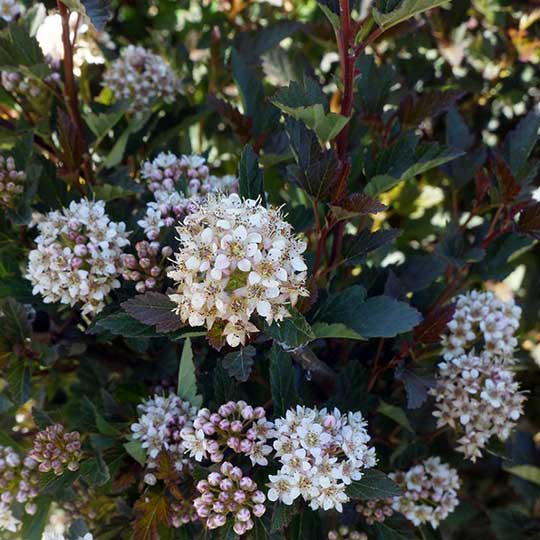
Corymb Floral Clusters: In late spring and early summer, the plant produces rounded clusters of white or pinkish-white flowers. These blooms are highly attractive to native bees and butterflies, playing a practical role in local pollination.
-
Diverse Foliage Color: While the native species is green, modern cultivars offer leaves in shades of deep burgundy, copper, and bright chartreuse. This color remains consistent through the heat of the summer, providing a permanent visual contrast in the landscape.
-
Persistent Fruit Capsules: Following the floral display, the plant produces drooping clusters of reddish seed pods. These pods provide a source of color in the late summer and a food source for local birds in the autumn.
-
Erosion Control: The dense, vigorous root systems make these shrubs a practical choice for stabilizing steep slopes or banks where soil movement is a concern.
Planting and Maintenance Advice
To ensure your shrub remains healthy and produces a prolific amount of flowers and colorful foliage each year, follow these straightforward care steps:
-
Full Sun Exposure: This is the most critical factor for foliage color and plant density. While ninebark can grow in partial shade, the burgundy and copper-leafed varieties will often turn green, and the growth habit may become leggy if the plant receives less than 6 hours of direct light daily.
-
Pruning for Rejuvenation: Physocarpus ninebark blooms on "old wood" (growth from previous seasons). If you wish to manage the size or shape, do so immediately after the flowers fade in the summer. For older, overgrown specimens, a practical maintenance strategy is to remove one-third of the oldest stems at ground level every spring.
-
Soil and Drainage: While it is adaptable to clay, the plant will not tolerate stagnant, standing water. In our heavy clay soil, ensure the planting site is well-drained. Proper drainage is a mechanical necessity to prevent root rot or powdery mildew.
-
Powdery Mildew Awareness: Some varieties can be susceptible to powdery mildew in humid conditions. Choosing resistant cultivars and ensuring good airflow through proper spacing and thinning of the interior branches are effective preventative measures.
-
Mulching: Maintain a 3-inch layer of organic mulch around the root zone, taking care not to pile it against the main stems. This helps regulate soil temperature and retains moisture during the dry weeks of August.
Frequently Asked Questions (Lake County Edition)
Why is my purple Ninebark turning green?
This is almost always caused by a lack of sunlight. The pigments in the leaves require direct sun to develop fully. Moving the plant to a location with at least 6 to 8 hours of sun will restore the burgundy or copper tones.
Is it a native plant?
Yes. Physocarpus opulifolius is native to eastern North America, including Illinois. It is a functional choice for homeowners who want to incorporate native species into their landscape without sacrificing ornamental appeal.
Visit The Country Bumpkin Garden Center
We are located at the corner of Gilmer Rd & Hawley St in Mundelein. Stop by to see the various colors and growth habits of Physocarpus ninebark in person—from the bold 'Center Glow' to the compact 'Little Devil'—and find the right fit for your landscape. We are a local resource for gardeners across Mundelein, Riverwoods, Round Lake, and the surrounding communities.
Call (847) 566-2176 or Send a Message to check current availability.
Varieties: Ginger Wine, Lemon Candy, Panther, Summer wine
See: Shrubs and Roses
Category: Sun Perennials - Sun Plants - Sunny Plants - Shrubs - Deciduous Shrubs - Ninebark near me - Physocarpus opulifolius