petunia
Grandiflora - Single Mix - Multiflora
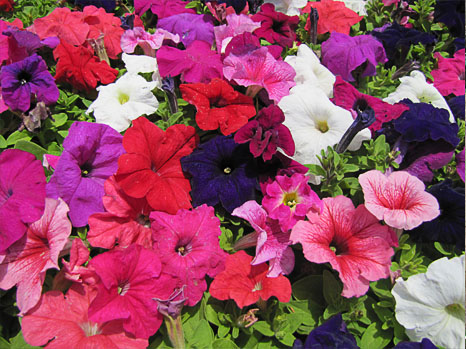
Enhancing Your Garden with Petunia
The petunia remains the undisputed king of the summer garden, offering an unparalleled volume of color and a wide variety of growth habits. Whether you are looking for a cascading "wave" of blooms for a hanging basket or a tidy, mounded upright for your front walkway, incorporating the petunia into your seasonal plan ensures a high-impact display. These garden staples are prized for their trumpet-shaped flowers and their ability to bloom continuously from late spring until the first hard frost, with a color palette that includes every imaginable shade, including striking bicolors and velvety near-blacks.
Performance in Northern Illinois Soil
Gardeners in Lake County understand that the summer transition can bring heavy rains followed by intense humidity. Fortunately, the petunia is remarkably adaptable to our regional conditions. In communities like Libertyville and Vernon Hills, where residential landscapes often feature nutrient-dense but heavy clay soil, these plants perform best when the earth is amended with organic matter to ensure adequate drainage. While they appreciate the rich "black dirt" of Northern Illinois, keeping the roots from sitting in stagnant water during a wet June is the key to preventing yellowing foliage and maintaining a healthy, vigorous root system.
Size, Spacing, and Growth Habit
Petunia varieties offer a range of sizes and forms that fit perfectly into different tiers of the landscape. Grandiflora types produce large, individual blooms, while Multiflora and Milliflora varieties offer a higher density of smaller flowers.
-
Spacing: For garden beds, space individual plants approximately 12 inches apart to allow them to knit together into a solid carpet of color. For containers, they can be planted more densely for an immediate "full" look.
-
Habit: Trailing varieties can spread up to 3 feet, making them ideal "spillers," while mounded types reach about 10 to 15 inches in height and width, providing a clean, structured appearance for borders.
Environmental Requirements
To get the most out of your plants, site them in a location that receives full sun. In our Northern Illinois climate, the petunia craves at least six to eight hours of direct light to produce the maximum number of buds. While they are heat-tolerant, they do require consistent moisture, especially during the "dog days" of August. In Lake County, the wind can dry out hanging baskets quickly, so checking soil moisture daily is essential. They are heavy feeders and will show their best colors when provided with the energy needed to sustain their rapid growth.
Landscape Characteristics
The visual impact of the petunia is defined by its sheer floral density and versatility. Beyond the aesthetics, many older or heirloom varieties possess a light, spicy fragrance that is particularly noticeable on warm, humid evenings. In the landscape, they serve as a reliable "filler" or "spiller," often used to hide the fading foliage of spring bulbs or to provide a saturated color block that can be seen from the street. Their nectar-rich throats also make them a frequent stop for local hummingbirds and clearwing moths, adding a touch of motion to your garden beds.
Planting and Maintenance Advice
Wait until the soil has warmed and the danger of frost has passed—typically mid-to-late May in Mundelein—before planting.
-
Fertilization: Use a balanced, water-soluble fertilizer every one to two weeks. Because they bloom so prolifically, they require regular "fuel" to keep producing new flowers.
-
Maintenance: While many modern "Wave" or "Supertunia" varieties do not require deadheading, traditional varieties benefit from the removal of spent blooms to prevent seed pods. If the plants begin to look "leggy" in mid-July, don't be afraid to trim them back by one-third; this encourages a fresh flush of growth and more compact blooming for the rest of the season.
Reliable Companion Plants for our Area
Pairing the petunia with other sun-loving staples creates a dynamic and professional-looking display. They coordinate beautifully with:
-
Angelonia: The upright, "Summer Snapdragon" spikes provide a vertical contrast to the mounding or trailing petunia stems.
-
Euphorbia: Varieties like "Diamond Frost" provide a delicate, misty white texture that softens the bold petunia colors.
-
Geraniums: The sturdy structure and rounded leaf shapes of geraniums offer a classic Mediterranean look when planted alongside trailing petunias.
Frequently Asked Questions
Why are my petunias getting sticky?
It is natural for petunia stems and leaves to have a slightly sticky feel; this is a defense mechanism. However, if they become excessively sticky or the leaves distort, check for aphids, which are a common early-summer pest in our area.
Can they survive a light frost?
While they are much more sensitive than pansies, established petunias can often survive a very light, brief frost, though it is always safer to cover them if a late-season cold snap is predicted.
Visit The Country Bumpkin Garden Center
Are you ready to transform your patio or garden beds with a tidal wave of color? We proudly serve the gardening communities of Wauconda and Lake Zurich, providing high-quality nursery stock and expert advice for our unique Midwestern climate. Our team is here to help you select the perfect varieties to ensure your garden remains vibrant all summer long.
Call (847) 566-2176 or Send a Message to check current availability.
See: Annuals
Category: Sun Annuals - Sun Plants - Sunny Plants - Petunia near me