magnolia
Magnolia Shrub
Magnolia: A Structural Flowering Genus for Illinois Landscapes
Magnolia, a diverse genus of ancient deciduous and evergreen trees and shrubs, is a foundational element in Midwest horticulture available at our Mundelein nursery. For homeowners in Mundelein or Mettawa looking to add substantial spring color and a distinct, architectural presence to their properties, this genus is a functional choice. Its ability to produce large, wax-like blossoms before or alongside its emerging foliage makes it a steady performer in any North Suburb garden where seasonal transitions and reliable garden definition are the primary goals.
Performance in Northern Illinois Soil
This genus is hardy in our Zone 5b climate and is a representative selection for residential specimen plantings and sheltered garden corners. While many ornamental trees struggle with the heavy, unyielding clay found throughout the region, certain magnolia varieties grow well in it, provided the site is rich in organic matter and maintains consistent moisture. It is successful in the established, wind-protected landscapes of Mettawa, where its root system can anchor firmly in cool, mulched soil. In Mundelein, these plants act as a durable architectural staple, emerging with fuzzy, oversized terminal buds in late winter that open into iconic blossoms during the early spring months.
Size, Spacing, and Growth Habit
Planning for the mature dimensions of these trees and shrubs ensures they provide the intended visual impact without outgrowing their allotted space or requiring corrective pruning:
-
Star Magnolia (Magnolia stellata): This slow-growing shrub typically reaches 10 to 15 feet tall and 10 to 15 feet wide, often featuring a multi-stemmed, rounded habit.
-
Saucer Magnolia (Magnolia x soulangeana): These can reach 20 to 30 feet tall and 20 to 30 feet wide, developing a broad, spreading canopy that often reaches the ground if not limbed up.
-
Loebner Magnolia (Magnolia x loebneri): Varieties like 'Leonard Messel' reach 20 to 30 feet tall and 20 to 25 feet wide with an upright, oval-to-rounded silhouette.
-
Spacing Requirements: For specimen use, ensure a 15-to-20-foot radius from buildings or larger canopy trees to allow the horizontal branching to develop fully. If used as a large-scale informal screen, space plants at least 12 feet apart from center to center.
Characteristics of Magnolias
In the North Suburbs, this group of plants serves as a source of seasonal transitions and functional landscape support, addressing several specific gardening requirements:
-
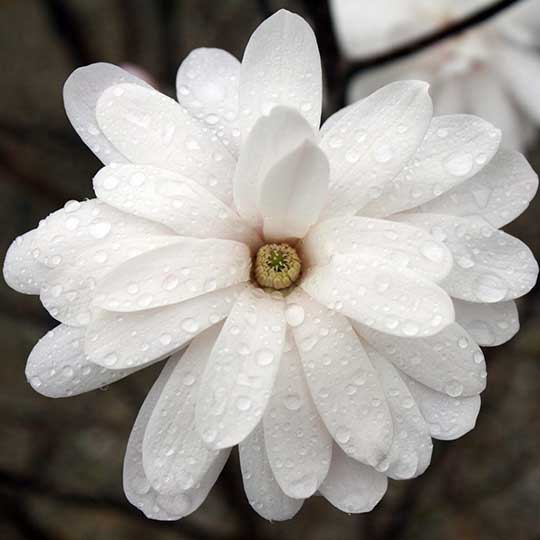
Diverse Floral Forms: The plant produces flowers ranging from the multi-petaled, star-shaped blooms of the M. stellata to the large, goblet-shaped blossoms of the M. x soulangeana. This characteristic is commonly utilized to provide a high-impact focal point before other deciduous trees have leafed out.
-
Aromatic Presence: Many varieties, particularly the 'Royal Star' or Sweetbay magnolias, produce a light, citrus-like fragrance. This characteristic is commonly utilized to add a sensory element near patios or entryways.
-
Distinctive Foliage and Buds: The leaves are typically large, leathery, and dark green, providing a lush summer appearance. In the winter, the large, silvery-grey terminal buds provide a structural interest against the grey Illinois sky.
-
Fruit and Seed Production: Following the floral display, magnolias produce cone-like follicles that split open to reveal bright red or orange seeds. These seeds are a food source for local birds and small mammals in the late summer and autumn.
-
Pollinator Support: The blossoms are one of the earliest sources of pollen for emerging beetles and bees, playing a practical role in the local spring ecology.
Planting and Maintenance Advice
To ensure your plant remains healthy and produces a prolific amount of flowers each year, follow these straightforward care steps:
-
Light and Exposure: Most magnolias prefer full sun to partial shade. In our region, protection from the harsh western winds of winter is a practical way to prevent "bud blast," where the flower buds dry out and fail to open in the spring.
-
Site Selection and Drainage: Proper drainage is the most critical factor for success. While they are adaptable, magnolias will not tolerate "wet feet" or stagnant water. In our heavy clay soil, slightly elevating the root ball at the time of planting is a functional necessity.
-
Minimal Pruning Needs: These plants naturally maintain a balanced, attractive shape and require very little intervention. If pruning is required to remove dead or crossing branches, it should be done immediately after the flowers fade in the spring. Pruning too late in the season will remove the buds for the following year.
-
Fleshy Root Systems: Magnolias have shallow, fleshy roots that are sensitive to disturbance. Avoiding deep cultivation or heavy foot traffic under the canopy is a practical maintenance strategy.
-
Mulching: Maintain a 3-inch layer of organic mulch around the root zone, extending out to the drip line. This is a mechanical necessity to keep the soil cool and to retain the moisture levels required for healthy growth during the dry weeks of August.
Frequently Asked Questions (Lake County Edition)
Why did my magnolia buds turn brown and fall off?
In our unpredictable Midwest climate, a late spring frost after the buds have started to swell can damage the delicate petals. This is commonly seen in early-blooming varieties. Selecting mid-to-late blooming types like 'Jane' or 'Ann' can mitigate this risk.
Is it an evergreen?
While the Southern Magnolia (M. grandiflora) is evergreen, it is not hardy in Zone 5b. For our region, the Sweetbay Magnolia (M. virginiana) is semi-evergreen, but most magnolias we utilize are deciduous, dropping their leaves after a vibrant yellow or bronze autumn transition.
Visit The Country Bumpkin Garden Center
We are located at the corner of Gilmer Rd & Hawley St in Mundelein. Stop by to see the various species and growth habits of magnolia in person—from the shrub-like 'Royal Star' to the upright 'Galaxy'—and find the right fit for your landscape. We are a local resource for gardeners across Mundelein, Mettawa, and the surrounding communities.
Call (847) 566-2176 or Send a Message to check current availability.
Varieties: Royal Star (white), Jane (pink), Leonard Messel (white-pink).
Image: Magnolia stellata ‘Royal Star’
See: Shrubs and Roses
Category: Sun Perennials - Sun Plants - Sunny Plants - Shrubs - Deciduous Shrubs - Magnolia near me