creeping phlox
Phlox Subulata
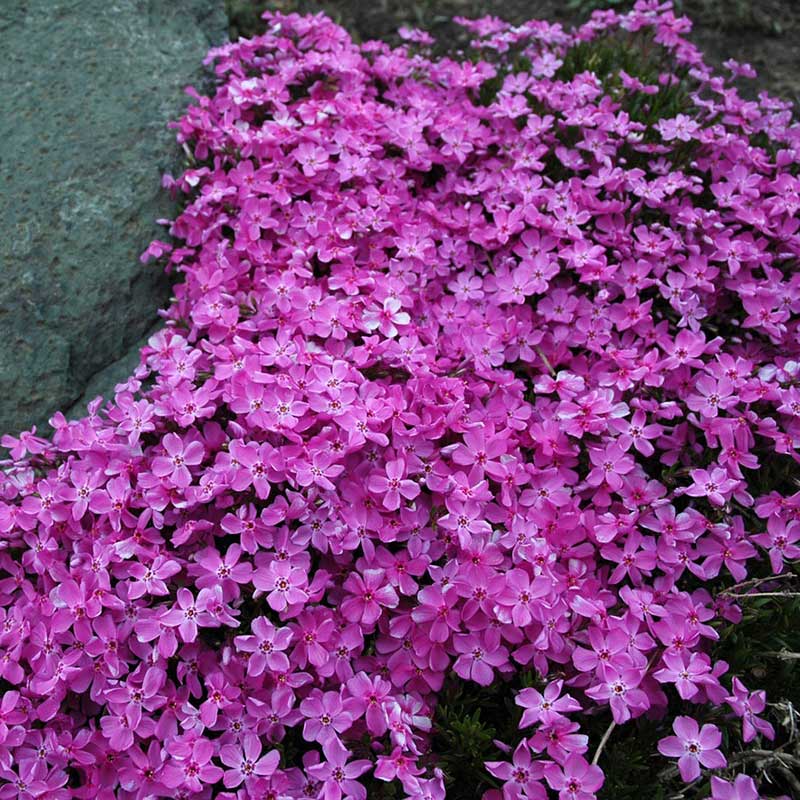
Creeping Phlox: The Vibrant Spring Carpet of Lake County
Phlox subulata, universally known as creeping phlox or moss phlox, is the most spectacular and prolific spring-flowering groundcover we offer at our Mundelein nursery. For homeowners in Old Mill Creek or Orchard Lake looking to transform a dry slope, a rocky border, or a retaining wall into a solid sheet of neon pink, electric blue, or snowy white, this plant is an absolute necessity. Its needle-like, evergreen foliage and carpet-forming habit make it a premier performer in any North Suburb garden where high-impact color and low-maintenance erosion control are the priorities.
Performance in Northern Illinois Soil
This perennial is exceptionally hardy in our Zone 5b climate and is a true champion of the early spring landscape. While many ornamental flowers struggle with the variable conditions typical of the region, creeping phlox thrives in well-drained soil and full sun exposure. It is particularly successful in the elevated or sloped properties of Orchard Lake, where its dense root system can anchor into the earth and prevent soil washout during heavy spring rains. In Old Mill Creek, these plants act as a reliable "living mulch," emerging from under the snow with green foliage that is quickly obscured by thousands of tiny, star-shaped blossoms as soon as the ground warms in April.
Size, Spacing, and Growth Habit
Understanding the low-profile and expansive nature of this plant is key to successful groundcover planning and slope stabilization:
-
Average Height: This is a true "prostrate" grower, reaching a height of only 4 to 6 inches tall.
-
Average Width: Each individual plant forms a dense, spreading mat that spans 12 to 24 inches wide.
-
Spacing Requirements: To achieve a solid, weed-suppressing carpet within two growing seasons, space plants 12 to 15 inches apart in a staggered pattern.
Why Creeping Phlox is a Practical Local Choice
In the North Suburbs, this group of perennials serves as a reliable "problem-solver" for difficult sunny spots, solving several specific gardening challenges:
-
Unmatched Early Color: It blooms alongside tulips and daffodils, providing a massive horizontal wash of color that complements the verticality of spring bulbs.
-
Erosion Control: Because it forms a thick, interlocking mat of stems and roots, it is the gold standard for stabilizing sunny hillsides and embankments.
-
Deer and Rabbit Resistance: While the flowers may occasionally be sampled, the prickly, needle-like foliage is generally avoided by local wildlife.
-
Salt Tolerance: It is surprisingly resilient to the occasional salt spray, making it a viable choice for planting near driveways or sidewalks that receive winter treatment.
Planting and Maintenance Advice
To ensure your plant remains a vibrant focal point and returns with vigor each spring, follow these straightforward care steps:
-
The "Post-Bloom Haircut": This is the most critical factor for long-term health. Once the flowers fade in late May, use garden shears to trim the plant back by about one-third. This encourages fresh green growth and prevents the center of the clump from becoming "woody" or sparse.
-
Prioritize Drainage: While it is tough, it will not tolerate "wet feet" during the winter. In our heavy clay soil, ensure the plant is sited in a raised bed, on a slope, or in an area amended with organic matter to prevent crown rot.
-
Full Sun is Mandatory: To achieve the maximum flower density and the tightest foliage mat, provide at least 6 to 8 hours of direct, unobstructed light. In shade, the plant will become thin and fail to bloom.
-
Minimal Fertilizer: It thrives in "lean" soil. A simple top-dressing of compost in the spring is usually sufficient. Too much nitrogen will result in excessive foliage at the expense of next year's flower buds.
-
Winter Protection: In Lake County, the evergreen foliage can sometimes "bronze" or dry out in extreme winter winds. A light covering of evergreen boughs can help protect the leaves until the spring thaw.
Frequently Asked Questions (Lake County Edition)
Is it evergreen?
Yes. In most winters, the needle-like foliage stays green under the snow, providing a bit of color in the garden when everything else is dormant and brown.
Why is the center of my plant dying?
This is usually caused by a lack of sunlight or failure to prune the plant after it blooms. Trimming it back annually ensures the plant stays rejuvenated and dense from the center out.
Visit The Country Bumpkin Garden Center
We are located at the corner of Gilmer Rd & Hawley St in Mundelein. Stop by to see the incredible variety of creeping phlox colors we carry and find the right fit for your sunny slopes. We are proud to be a local resource for gardeners across Mundelein, Orchard Lake, and the surrounding communities.
Call (847) 566-2176 or Send a Message to check current availability.
Varieties: Creeping red, Pink, Bifida, Coral Creme Drop, Fort Hill, Grace, North Hills, David, Lollipop, Laura, Minnie Pearl, Orange Perfect.
See: Perennials
Category: Sun Perennials - Sun Plants - Sunny Plants - Creeping phlox near me - Phlox subulata