Cephalanthus occidentalis
Button Bush
Button Bush: A Native Wetland Shrub for the Illinois Landscape
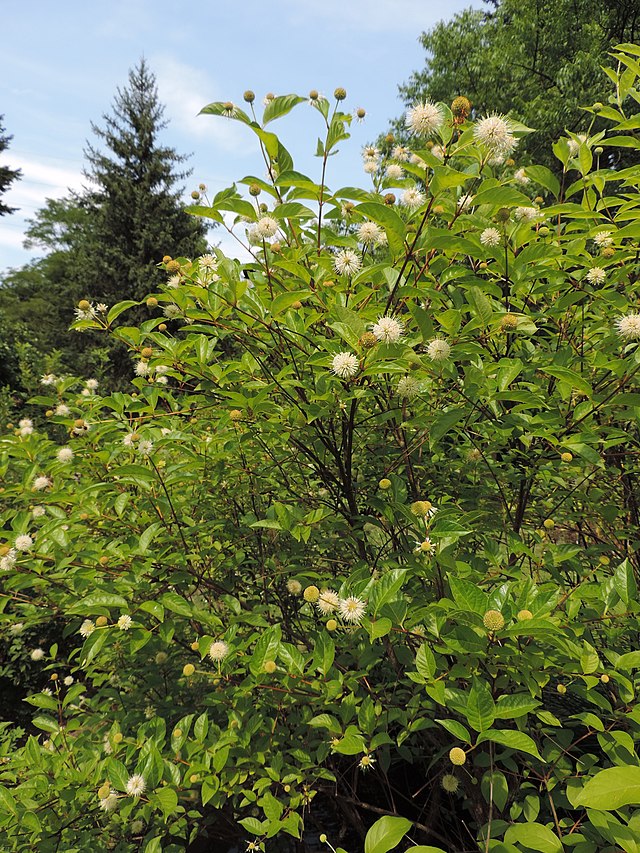
Button bush (Cephalanthus occidentalis) is a deciduous, moisture-loving native shrub in the madder family available at our Mundelein nursery. For homeowners in Trout Valley or Tower Lakes looking to add a unique floral structure and significant ecological value to their damp garden spots or pond edges, this plant is a functional choice. Its ability to grow in saturated soils and its distinctive spherical flower heads make it a steady performer in any North Suburb garden where water management and pollinator support are the primary goals.
Performance in Northern Illinois Soil
This shrub is hardy in our Zone 5b climate and is a representative selection for Midwest wetlands, riparian zones, and rain gardens. While many ornamental shrubs struggle with the heavy, unyielding clay found throughout the region, the button bush grows well in it, provided the site remains consistently moist or even wet. It is successful in the low-lying, water-receptive landscapes of Tower Lakes, where its root system can anchor firmly in soil that stays damp throughout the year. In Trout Valley, these plants act as a durable landscape staple, emerging with glossy, lance-shaped green leaves in late spring that provide a lush, tropical appearance even in the humidity of a Lake County summer.
Size, Spacing, and Growth Habit
Planning for the mounded and somewhat irregular nature of this shrub ensures it provides the intended screening or structural mass without encroaching on walkways or being overshadowed by larger canopy trees:
-
Average Height: Depending on the cultivar and available moisture, the shrub typically reaches 6 to 12 feet tall.
-
Average Width: Most mature specimens develop a sprawling footprint spanning 7 to 15 feet wide.
-
Spacing Requirements: To create a solid native hedge or a continuous wildlife thicket, space plants 8 to 10 feet apart. This allows the multi-stemmed base to expand while maintaining enough airflow to keep the interior foliage healthy and preventing the plant from becoming too leggy as it reaches for light.
Characteristics of Button Bush
In the North Suburbs, this group of shrubs serves as a source of mid-summer interest and vital wildlife support, addressing several specific gardening requirements:
-
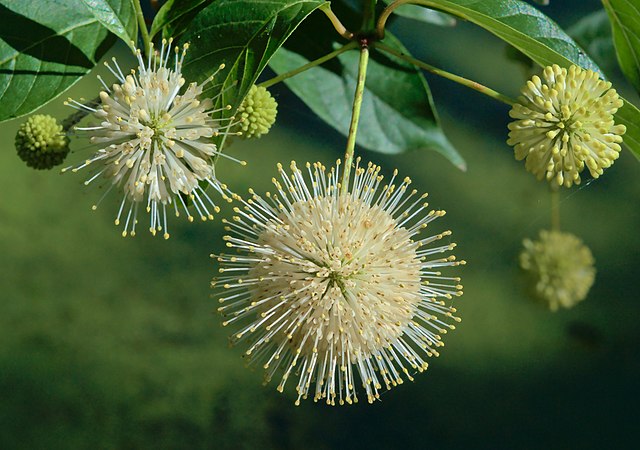
Distinctive Spherical Blooms: In July and August, the plant produces perfectly round, one-inch flower clusters that resemble pincushions. This characteristic is commonly utilized to provide a geometric focal point in the garden during the height of summer.
-
Pollinator Magnet: The fragrant white flowers are a primary nectar source for honeybees, bumblebees, and various butterflies, including the Silver-spotted Skipper and the Tiger Swallowtail.
-
Functional Wetland Mitigation: Because it thrives in standing water and saturated soil, it is an effective plant for stabilizing shorelines and preventing erosion along creek beds or in drainage swales.
-
Nutrient-Rich Seeds: After the flowers fade, they develop into round, reddish-brown nutlets. These seed heads persist into the winter, providing a food source for waterfowl and various songbirds.
Planting and Maintenance Advice
To ensure your shrub remains healthy and produces a prolific amount of "button" flowers each year, follow these straightforward care steps:
-
Light Exposure: While it can tolerate partial shade, full sun (at least 6 hours) is required to achieve the densest growth habit and the highest volume of flowers.
-
Consistent Moisture is Key: This is not a drought-tolerant plant. It is a functional choice for "problem" wet spots where other shrubs fail. If planted in a standard border, it will require frequent supplemental irrigation to prevent the leaves from scorch or premature drop.
-
Pruning for Shape: Button bush can sometimes take on a "rangy" or unkempt appearance if left entirely alone. It blooms on "new wood" (growth from the current season), so it can be pruned back significantly in early spring to encourage a more compact, mounded shape and more vigorous flowering.
-
Soil Adaptability: While it prefers acidic to neutral soils, it is adaptable to the slightly alkaline clay often found in our region, provided there is enough organic matter to help retain moisture.
-
Pest and Disease Resilience: This native species has few serious pest problems, making it a low-maintenance option for the homeowner who prefers to avoid chemical interventions in the landscape.
Frequently Asked Questions (Lake County Edition)
Can it grow in the middle of a pond?
Yes, it can handle standing water up to several inches deep once established. This makes it a practical choice for the "shallows" or transition zones of a water feature.
Why is it leafing out so late?
Like several other native shrubs, it is often one of the last to emerge in the spring. In our region, you may not see significant leaf development until late May. This is normal behavior and does not mean the plant did not survive the winter.
Visit The Country Bumpkin Garden Center
We are located at the corner of Gilmer Rd & Hawley St in Mundelein. Stop by to see the unique structure of button bush in person—including compact cultivars like 'Sugar Shack'—and find the right fit for your wet landscape areas. We are a local resource for gardeners across Mundelein, Tower Lakes, and the surrounding communities.
Call (847) 566-2176 or Send a Message to check current availability.
Varieties: Sugar Shack.
Image: Creative Commons 'Sugar Shack'
See: Shrubs and Roses
Category: Sun Perennials - Sun Plants - Sunny Plants - Shrubs - Deciduous Shrubs - Button Bush near me - Cephalanthus occidentalis