bergenia crassifolia
Pigsqueak - Siberian Tea - Bergenia
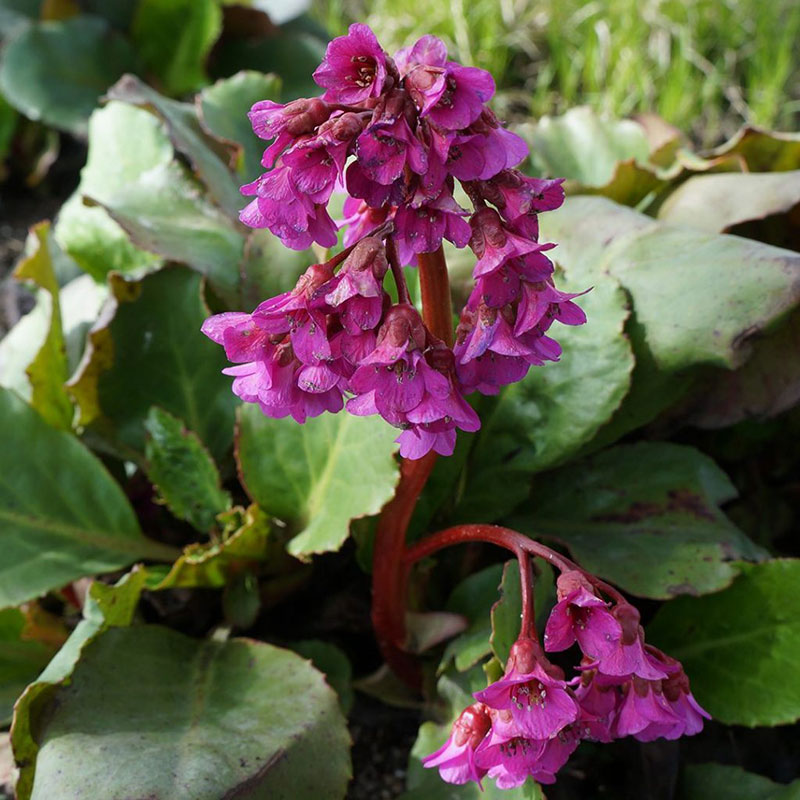
Bergenia (Pigsqueak): Bold Texture for Year-Round Interest
Bergenia, affectionately known as Pigsqueak due to the sound made when rubbing its waxy leaves, is one of the most durable evergreen perennials we offer at our Mundelein nursery. For homeowners in Ivanhoe or Kildeer looking for a groundcover that provides architectural interest even in the dead of winter, this plant is an essential choice. Its thick, leathery foliage and clusters of spring flowers make it a versatile performer in any Lake County landscape.
Performance in Northern Illinois Soil
This perennial is remarkably hardy in our Zone 5b climate. While many broad-leafed plants suffer from the heavy, moisture-retaining clay found throughout the region, a well-sited bergenia thrives in it. It is particularly successful in the rich, damp soils found in wooded areas, where it can handle the transition from a soggy spring to a humid Illinois summer without skipping a beat.
For the best results, plant it in partial shade to full sun. While it is incredibly adaptable, the foliage often takes on a more dramatic, bronze-to-burgundy hue in the autumn if it receives a bit of direct sunlight. In deep shade, the leaves remain a lush, dark green year-round but may produce fewer of its signature pink or white flower spikes in early May.
Why Pigsqueak is a Practical Local Choice
In the North Suburbs, this group of perennials serves as a reliable multi-season anchor, solving several specific gardening challenges:
-
Evergreen Structure: Unlike most perennials that disappear completely in November, the foliage of a bergenia persists through the snow, providing vital structure and color during the grey winter months.
-
Superior Wildlife Resistance: The thick, rubbery texture of the leaves makes them highly unappealing to the deer and rabbits that roam near the local forest preserves.
-
Early Spring Pollinator Support: The bell-shaped flowers emerge early in the season, providing an important nectar source for native bees just as they are waking up in Ivanhoe.
-
Excellent Erosion Control: Because of its dense, clumping habit and tough root system, it is an ideal choice for stabilizing small slopes or edging garden paths.
Planting and Maintenance Advice
To ensure your bergenia maintains its bold look and vibrant winter color, follow these straightforward care steps:
-
Manage Winter Burn: In early April, you may notice some of the outer leaves look tattered or brown from the winter wind. Simply snip these off at the base to make room for the fresh, glossy growth emerging from the center.
-
Moisture Consistency: While they are tough, they do best with consistent moisture. If the soil in your Kildeer garden dries out completely during a hot August, the leaves may wilt or lose their shine.
-
Division: Every 4 to 5 years, the plant may become a bit "leggy" as it spreads. Dig it up in early spring or late fall, divide the rhizomes, and replant them to keep the carpet dense and vigorous.
-
Mulching: Apply a light layer of wood mulch around the base to help retain moisture, but be careful not to bury the crown, as this can lead to rot in heavy clay soils.
-
Minimal Fertilizer: They are not heavy feeders. A simple top-dressing of compost in the spring is usually all that is needed to support healthy growth.
Reliable Companion Plants for our Area
To create a pleasant, multi-layered look in the garden, consider pairing Bergenia with these specific varieties:
-
Hostas: The bold, leathery, and rounded leaves of Bergenia provide a fantastic textural contrast to the diverse colors and pointed leaf shapes of hostas. Both thrive in partial shade and appreciate the consistent moisture found in established garden beds.
-
Ferns: The delicate, lacy fronds of ferns like the Japanese Painted Fern or Lady Fern offer an airy counterpoint to the thick, "pig-squeak" foliage of the Bergenia. This pairing creates a classic woodland aesthetic that remains lush from spring through fall.
-
Astilbe: Since Bergenia blooms early in the spring, planting it alongside Astilbe ensures a continuation of color. The feathery flower plumes of the Astilbe rise above the low-growing Bergenia leaves in mid-summer, while the Bergenia foliage acts as a thick, green groundcover at the base.
-
Bleeding Heart (Lamprocapnos): The arching, dainty stems of Bleeding Hearts contrast beautifully with the sturdy, upright flower stalks of the Bergenia. Both are among the first to signal spring in the garden and share a preference for organic, well-drained soil.
Frequently Asked Questions (Lake County Edition)
Why is it called Pigsqueak?
If you rub your thumb and forefinger across a leaf, the waxy surface creates a high-pitched squeaking sound. It is a fun characteristic that makes it a favorite for children’s gardens in Ivanhoe.
Is it invasive?
No. It spreads slowly via thick rhizomes to form a tidy, manageable clump. It stays exactly where you plant it and is easy to keep in bounds.
Visit The Country Bumpkin Garden Center
We are located at the corner of Gilmer Rd & Hawley St in Mundelein. Stop by to see the unique texture of bergenia for yourself and find the right variety for your year-round landscape. We are proud to be a local resource for gardeners across Mundelein, Kildeer, and the surrounding communities.
Call (847) 566-2176 or Send a Message to check current availability.
Varieties: Winter Glut.
See: Perennials
Category: Shade Perennials - Shade Plants - Shady Plants - Bergenia near me - Pigsqueak