aronia
Chokeberry - Aronia - Red Chokeberry
Aronia Chokeberry: A Multi-Seasonal Native Shrub for the Midwest
Aronia chokeberry, a genus of deciduous shrubs native to eastern North America, is a resilient and versatile woody plant frequently stocked at our Mundelein nursery. For homeowners in Palatine or Park Ridge looking to incorporate a plant that offers spring flowers, summer fruit, and intense autumn foliage, this shrub is a functional choice. Its ability to adapt to various soil moisture levels and its high wildlife value make it a steady performer in any North Suburb garden where ecological diversity and multi-seasonal visual interest are the primary goals.
Performance in Northern Illinois Soil
This shrub is hardy in our Zone 5b climate and is a representative selection for both formal landscapes and naturalized restoration projects. While many ornamental shrubs struggle with the heavy, unyielding clay found throughout the region, the aronia chokeberry grows well in it, demonstrating a particular tolerance for damp or occasionally wet areas. It is successful in the varied landscapes of Park Ridge, where it can handle the transition from a wet spring to a dry summer. In Palatine, these plants act as a durable structural staple, emerging with clean, finely-toothed green leaves in the spring that remain attractive and disease-resistant throughout the growing season.
Size, Spacing, and Growth Habit
Planning for the mounded and upright nature of this shrub ensures it provides the intended screening or structural mass without overgrowing its designated space:
-
Average Height: Depending on the species and cultivar, height can vary significantly. Red Chokeberry (Aronia arbutifolia) typically reaches 6 to 8 feet tall, while Black Chokeberry (Aronia melanocarpa) often stays between 3 to 5 feet tall. Compact cultivars like 'Low Scape Mound' stay under 2 feet.
-
Average Width: Most varieties develop a spreading habit with a footprint of 3 to 6 feet wide.
-
Spacing Requirements: To create a solid fruiting hedge or a continuous privacy screen, space plants based on their mature width—usually 4 to 5 feet apart for standard varieties. For individual specimen planting, leave a gap of at least 3 feet between mature widths to allow for proper airflow and fruit ripening.
Characteristics of Aronia Chokeberry
In the North Suburbs, this group of shrubs serves as a source of seasonal transitions and wildlife support, addressing several specific gardening requirements:
-
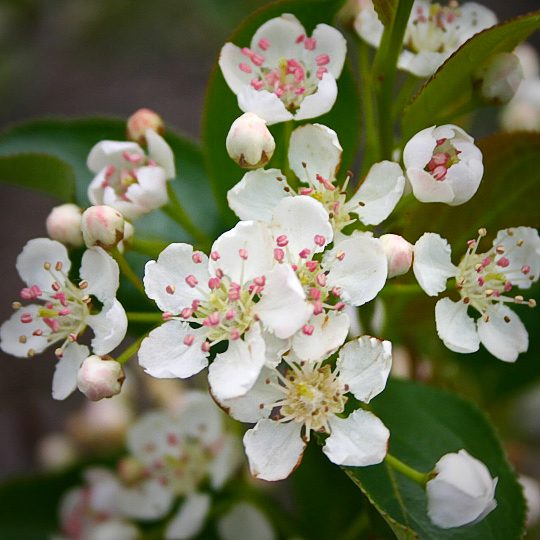
White Spring Blossoms: In May, the plant produces clusters of small, five-petaled white flowers that are commonly visited by native bees and pollinators seeking early-season nectar.
-
Nutrient-Dense Fruit: By late summer and early autumn, the shrub is laden with berries. While "chokeberry" refers to the astringent taste of the raw fruit, the berries are high in antioxidants and are frequently used in jams and juices.
-
Exceptional Autumn Foliage: One of the plant's strongest attributes is its fall color. The leaves transition from dark green to brilliant shades of crimson and orange, often rivaling the intensity of Burning Bush but with the benefit of being a native species.
-
Winter Interest: The berries of the Red Chokeberry variety often persist into the winter months, providing a color contrast against the snow and a late-season food source for non-migratory birds like waxwings and bluebirds.
Planting and Maintenance Advice
To ensure your shrub remains healthy and produces a prolific amount of fruit each year, follow these straightforward care steps:
-
Light Exposure: While it is adaptable to partial shade, full sun (at least 6 hours) is required to achieve the best flowering, fruit production, and the most vibrant autumn leaf color.
-
Soil and Moisture: This plant is one of the few shrubs that can handle "wet feet." It is a functional choice for low spots in the yard or near downspouts. However, once established, it is also surprisingly drought-tolerant.
-
Minimal Pruning Needs: Aronia maintains a naturally attractive shape with little intervention. If pruning is required to remove old wood or maintain a specific size, it should be done in late winter or very early spring before the flower buds begin to swell.
-
Suckering Habit: Some species of Aronia have a tendency to "sucker" or spread slowly by the roots, creating a thicket. This makes them excellent for erosion control on slopes. If a tidy appearance is desired in a formal border, simply prune away the new shoots at the base of the plant once a year.
-
Mulching: Maintain a 2-to-3-inch layer of organic mulch around the root zone. This is particularly important in our Lake County climate to regulate soil temperature and retain moisture during the dry weeks of August.
Frequently Asked Questions (Lake County Edition)
Are the berries edible?
Yes, though they are very tart if eaten directly off the bush. They are best utilized in recipes where sugar or other fruits are added. They are highly regarded for their nutritional density and high vitamin C content.
How does it compare to Burning Bush?
Aronia provides similar (or superior) red fall color but is a native plant that supports local ecosystems. Unlike Burning Bush, which is increasingly considered invasive in some regions, Aronia is a responsible choice for the Illinois landscape.
Visit The Country Bumpkin Garden Center
We are located at the corner of Gilmer Rd & Hawley St in Mundelein. Stop by to see the various species of aronia chokeberry in person—including the tall Red Chokeberry and the more compact Black Chokeberry—and find the right fit for your seasonal landscape. We are a local resource for gardeners across Mundelein, Park Ridge, and the surrounding communities.
Call (847) 566-2176 or Send a Message to check current availability.
Varieties: Ground Hug, Autumn Magic, Low Scape, Brilliantissima.
See: Shrubs and Roses
Category: Sun Perennials - Sun Plants - Sunny Plants - Shrubs - Deciduous Shrubs - Chokeberry near me - Aronia