baptisia
False Indigo - Wild indigo - Baptisia
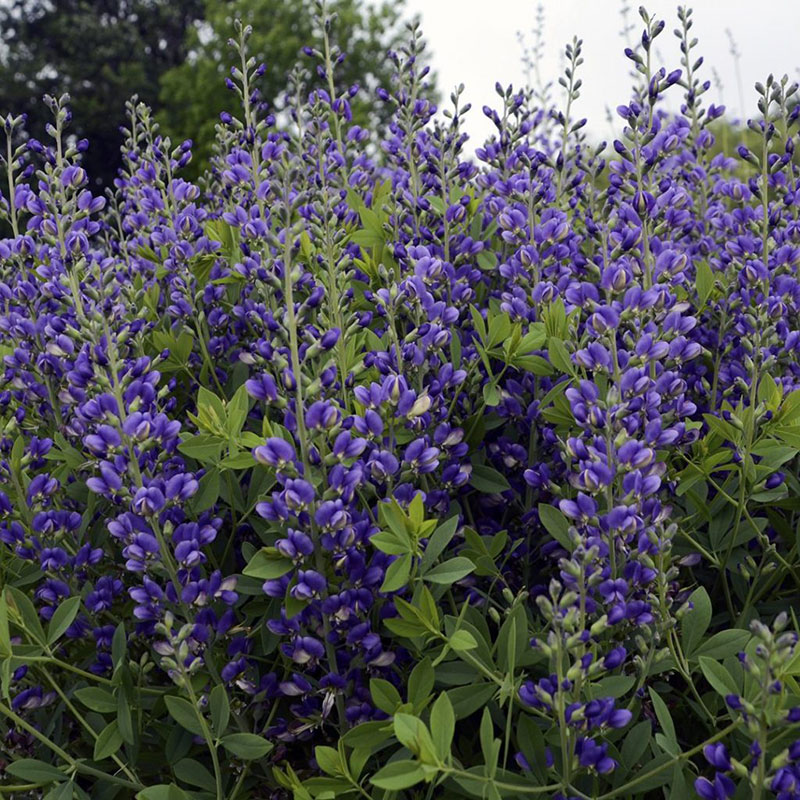
Baptisia (False Indigo): Structural Native Perennials for Lake County
Baptisia, commonly known as False Indigo, is one of the most durable and long-lived perennials we stock at our Mundelein nursery. For homeowners in Hawthorn Woods, Kildeer, and Libertyville who want a plant that looks like a shrub but returns with the reliability of a wildflower, this is a premier choice. It is a true "anchor" plant, providing a massive presence in the garden from late spring through the first frost.
Performance in Northern Illinois Soil
This native perennial is exceptionally hardy in our Zone 5b climate. While many nursery plants struggle with the heavy, unyielding clay found throughout Lake County, a well-sited baptisia thrives in it. Once established, its deep taproot allows it to shrug off the "yo-yo" spring temperatures and intense summer humidity common in neighborhoods like Lake Zurich or Long Grove.
For the best results, it should be planted in full sun, receiving at least 6 to 8 hours of direct light. In the shaded yards of Mettawa or Ivanhoe, the plant may become "floppy" and lean toward the sun, often requiring staking that it wouldn't need in an open, sunny field in Wauconda or Volo.
Why False Indigo is a Practical Local Choice
In the North Suburbs, this group of perennials serves as a permanent structural element, solving several specific gardening challenges:
-
Superior Wildlife Resistance: The foliage contains bitter compounds that make it highly unappealing to the deer and rabbits that frequent properties near the Lakewood Forest Preserve or the Des Plaines River Trail.
-
Shrub-Like Presence: Because it can grow up to 4 feet tall and wide, one baptisia can fill a large gap in a foundation bed just as effectively as a woody shrub, but without the risk of winter die-back.
-
Deep Drought Tolerance: After the first two seasons, the deep root system makes it virtually bulletproof during a hot Illinois July, requiring almost zero supplemental watering.
-
Exceptional Seed Pods: After the pea-like flowers fade in early summer, the plant produces large, charcoal-black seed pods that add unique architectural interest and a rhythmic "rattle" to your garden in late autumn.
Planting and Maintenance Advice
To ensure your baptisia establishes successfully and remains a focal point for decades, follow these straightforward care steps:
-
Choose a Permanent Home: Because of that deep taproot, this plant does not like to be moved. Select a spot in your Mundelein or Deer Park garden where it can stay undisturbed for its entire life.
-
Be Patient with Growth: It is often said that baptisia "sleeps, creeps, and then leaps." It may take three years to reach its full, shrub-like size, but the wait is well worth the longevity it provides.
-
No Division Required: Unlike many perennials, this plant never needs to be dug up and split. It only gets better and more robust with age.
-
Spring Cleanup: Cut the dead, woody stalks to the ground in early April. The stems are hollow and provide winter habitat for beneficial insects, so waiting until spring is a great way to support local biodiversity in your Gages Lake or Round Lake yard.
-
Minimal Fertilizer: As a member of the legume family, it can fix its own nitrogen in the soil. Heavy fertilizing is unnecessary and can actually lead to weaker, floppier stems.
Reliable Companion Plants for our Area
To create a pleasant, multi-layered look in the garden, consider pairing Baptisia with these specific varieties:
-
Peonies: Since both plants bloom in late spring, the massive, lush flowers of peonies provide a striking textural contrast to the elegant, lupine-like spikes of the False Indigo. Once the flowers fade, the sturdy, shrub-like foliage of the Baptisia remains clean and attractive, acting as a backdrop for the peony leaves.
-
Amsonia (Blue Star): Pairing Baptisia with Amsonia creates a beautiful tapestry of textures. The fine, willow-like foliage of the Blue Star offers a soft counterpoint to the broader, clover-like leaves of the Baptisia, and both plants share a similar upright, mounded growth habit.
-
Prairie Dropseed (Sporobolus heterolepis): This native ornamental grass provides an airy, fine-textured "skirt" around the base of the taller, more architectural Baptisia. The golden-orange fall color of the grass pairs exceptionally well with the dark, charcoal-colored seed pods that develop on the Baptisia late in the season.
-
Alliums: The globe-shaped flower heads of ornamental onions like 'Globemaster' or 'Purple Sensation' bobbing among the pea-shaped blossoms of the Baptisia create a whimsical and sophisticated spring display. Both plants are exceptionally hardy and resistant to common garden pests.
Frequently Asked Questions (Lake County Edition)
Is it slow to start blooming?
Nursery-grown plants from The Country Bumpkin are typically ready to bloom within their first or second year in your yard. Once it starts, a healthy baptisia will produce dozens of flower spikes every June.
Does it need a lot of space?
Yes. Give it at least 3 to 4 feet of room. In the rich soil of Vernon Hills or Lake Forest, it will quickly expand to fill its allotted space.
Visit The Country Bumpkin Garden Center
We are located at the corner of Gilmer Rd & Hawley St in Mundelein. Stop by to see the different colors of baptisia we carry—from classic indigo blue to vibrant yellows and bicolors. We are proud to be a local resource for gardeners across Mundelein, Hawthorn Woods, and Lake County.
Call (847) 566-2176 or Send a Message to check current availability.
Varieties: Pixie, Sunny Morning (yellow flowers).
Image: Baptisia ‘Blueberry Sundae’
See: Perennials
Category: Sun Perennials - Sun Plants - Sunny Plants - Baptisia near me - False Indigo