irish moss
Sagina Subulata - Irish Moss
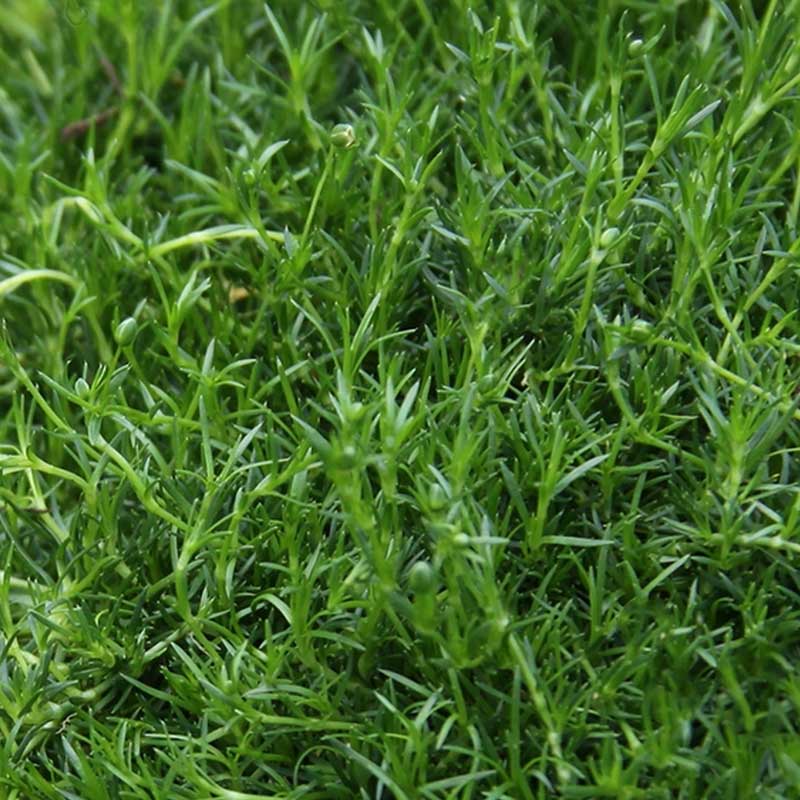
Irish Moss: A Dense Carpet for Shaded Paths and Rock Gardens
Sagina subulata, commonly known as Irish moss, is a low-growing, tufted perennial offered at our Mundelein nursery. For homeowners in Wheeling or Wildwood looking to create a lush, velvet-like groundcover between stepping stones or within rock garden crevices, this plant is a functional choice. Its ability to form a compact, moss-like mat and its tiny white flowers make it a steady performer in any North Suburb garden where a fine-textured, verdant floor is the primary goal.
Performance in Northern Illinois Soil
This perennial is hardy in our Zone 5b climate and is used frequently in European-style garden designs. While some ornamental groundcovers struggle with the heavy, moisture-retentive clay found throughout the region, Irish moss grows well in it, provided the site is amended with organic matter to improve aeration. It is successful in the shaded or dappled landscapes of Wildwood, where the soil remains cool during the summer months. In Wheeling, these plants act as a reliable gap-filler for flagstone paths or fairy gardens, emerging with bright green, needle-like foliage that remains present from early spring until the first hard frost of autumn.
Size, Spacing, and Growth Habit
Planning for the prostrate and spreading nature of this plant ensures it provides a full, seamless display without overgrowing taller garden features:
-
Average Height: At maturity, the plant typically reaches only 1 to 2 inches tall.
-
Average Width: Each individual clump forms a soft, spreading footprint of 6 to 12 inches wide.
-
Spacing Requirements: To create a naturalized carpet or a solid border, space plants 6 inches apart. This allows the foliage to knit together while maintaining enough airflow to keep the center of the mat healthy.
Characteristics of Irish Moss
In the North Suburbs, this group of perennials serves as a source of early-summer texture and specialized groundcover support, addressing several specific gardening requirements:
-
Tolerance for Light Foot Traffic: It is one of the plants that can handle occasional walking, making it a functional choice for planting between large stepping stones or along the edges of a garden path.
-
Delicate Flowering Period: In late spring and early summer, the green mat is covered in tiny, translucent white flowers that provide a subtle visual contrast to the emerald foliage.
-
Versatile Light Requirements: While it is often associated with shade, it can grow in full sun in our climate if the soil is kept consistently moist and the roots remain cool.
-
Evergreen Presence: In a typical Illinois winter, the dense foliage often retains its color under the snow, providing a "green" look much earlier in the spring than traditional turf grass or other herbaceous perennials.
Planting and Maintenance Advice
To ensure your plant remains healthy and returns with vigor each spring, follow these straightforward care steps:
-
Consistent Moisture: This is the most critical factor for success. Irish moss has a shallow root system and does not tolerate drying out completely. During a July drought, regular supplemental irrigation is necessary to prevent the mat from browning.
-
Soil and Drainage: While it likes moisture, it will not grow in stagnant, standing water. In our heavy clay soil, ensure the planting site is well-drained or slightly elevated to avoid crown rot.
-
Light Exposure: In our region, this plant often maintains its best color in partial shade or morning sun. If planted in a high-heat, full-sun location, a layer of mulch around the perimeter can help keep the root zone cool.
-
Minimal Fertilizer: It grows best in average soil. Excessive nitrogen can result in mounding or "humping," where the center of the plant pushes upward and dries out. A light top-dressing of compost in the spring is sufficient.
-
Seasonal Management: Unlike taller perennials, there is no need for pruning. Simply clear away fallen leaves or debris in the autumn to ensure the foliage is not smothered during the winter months.
Frequently Asked Questions (Lake County Edition)
Is it actually a moss?
No. While it looks like moss, Irish moss is actually a vascular flowering plant in the pink family (Caryophyllaceae). It is much more tolerant of varied light levels and soil types than true woodland mosses.
Why is the center of my mat turning brown?
This is often caused by the soil drying out too much or by "mounding." If the plant grows too thickly, the center loses contact with the soil. Pressing the mat down gently or dividing the clumps every few years can prevent this.
Visit The Country Bumpkin Garden Center
We are located at the corner of Gilmer Rd & Hawley St in Mundelein. Stop by to see the growth habit of Irish moss in person and find the right fit for your pathways or rock garden spots. We are a local resource for gardeners across Mundelein, Wildwood, and the surrounding communities.
Call (847) 566-2176 or Send a Message to check current availability.
See: Perennials
Category: Sun Perennials - Sun Plants - Sunny Plants - Irish Moss near me - Sagina Subulata