ligustrum vulgare
Privet - Common Privet - Ligustrum
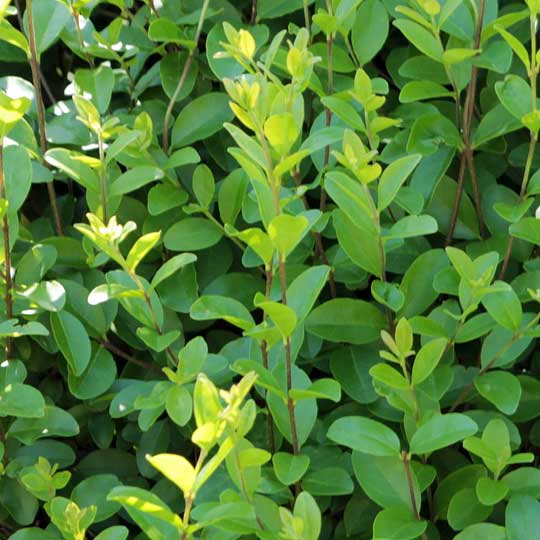
Ligustrum Privet: A Durable Shrub for Formal Hedges and Screening
Ligustrum privet, a genus of deciduous and semi-evergreen shrubs in the olive family, is a structural landscape element available at our Mundelein nursery. For homeowners in Lake Forest or Long Grove looking to establish a dense, manageable boundary or a fast-growing privacy screen, this genus is a functional choice. Its ability to tolerate heavy pruning and its resilience in various soil conditions make it a steady performer in any North Suburb garden where architectural definition and consistent green walls are the primary goals.
Performance in Northern Illinois Soil
This genus is hardy in our Zone 5b climate and is a representative selection for Midwest residential perimeters and formal garden partitions. While many ornamental shrubs struggle with the heavy, unyielding clay found throughout the region, the Ligustrum privet grows well in it, demonstrating a particular tolerance for urban conditions and compacted soils. It is successful in the open, expansive landscapes of Long Grove, where its deep root system can anchor firmly to support its upright, multi-stemmed frame. In Lake Forest, these plants act as a durable architectural staple, emerging with small, glossy green leaves in the spring that provide a solid, opaque screen throughout the growing season.
Size, Spacing, and Growth Habit
Planning for the upright and vigorous nature of this shrub ensures it provides the intended screening effect without requiring excessive maintenance to keep it away from structures:
-
Average Height: Depending on the species and cultivar, height can vary from 8 to 15 feet tall if left unpruned.
-
Average Width: Most mature specimens develop a footprint spanning 6 to 10 feet wide, often featuring an upright-oval or mounded silhouette.
-
Spacing Requirements: To create a solid, seamless formal hedge, space plants 2 to 3 feet apart from center to center. For a more naturalized, informal screen, space plants 4 to 5 feet apart to allow for individual branch development.
Characteristics of Ligustrum Privet
In the North Suburbs, this group of shrubs serves as a source of structural support and seasonal transitions, addressing several specific gardening requirements:
-
Dense Branching Structure: The plant naturally grows with a very tight, multi-stemmed habit. This makes it a functional choice for creating physical barriers that effectively block wind, noise, and unwanted views.
-
Shearing Adaptability: One of the most notable traits of this genus is its ability to handle frequent shearing. This characteristic is commonly utilized to create perfectly rectangular hedges or topiary shapes in formal landscape designs.
-
White Summer Flowers: In late spring and early summer, the plant produces small, terminal panicles of creamy white flowers. While the fragrance is distinct, these blooms provide a source of visual interest and nectar for local pollinators.
-
Dark Winter Berries: Following the floral display, the shrub produces small, dark blue or black berries that persist into the winter months. These serve as a supplementary food source for local birds when other options are scarce.
-
Pollution and Salt Tolerance: It is remarkably adaptable to the air quality and salt spray found in busy suburban corridors, making it a practical choice for parkways or street-side plantings.
Planting and Maintenance Advice
To ensure your shrub remains healthy and maintains its density each year, follow these straightforward care steps:
-
Full Sun to Partial Shade: While it is adaptable to light, full sun (at least 6 hours) is required to achieve the highest density of foliage from the base to the top of the plant. In heavy shade, the growth may become leggy and less effective as a screen.
-
Pruning Cycles: Ligustrum privet is a fast grower and can require pruning two to three times per year if a formal shape is desired. To maintain a healthy hedge, ensure the base of the plant is wider than the top; this allows sunlight to reach the bottom branches and prevents the base from becoming bare.
-
Rejuvenation Pruning: If an old hedge has become overgrown or thin at the bottom, it can be cut back to within 6 to 12 inches of the ground in late winter. This stimulates a fresh flush of dense growth from the root system.
-
Soil and Drainage: While it is adaptable to clay, it will not grow in stagnant, standing water. In our heavy clay soil, ensure the planting site is well-drained. Proper drainage is a mechanical necessity to prevent root rot.
-
Mulching: Maintain a 2-to-3-inch layer of organic mulch around the root zone, taking care not to pile it against the main stems. This helps regulate soil temperature and retain moisture during the dry weeks of August.
Frequently Asked Questions (Lake County Edition)
Is it an evergreen?
Most species used in our region, such as the Amur Privet (Ligustrum amurense), are deciduous, meaning they drop their leaves in the winter. Some varieties may be semi-evergreen during mild winters, retaining some foliage until the new spring growth emerges.
Why is my hedge bare at the bottom?
This is usually caused by improper pruning where the top of the hedge is wider than the bottom. This shades out the lower branches, causing them to lose their leaves. Re-shaping the hedge into a slight "A" frame will allow light to reach the base.
Visit The Country Bumpkin Garden Center
We are located at the corner of Gilmer Rd & Hawley St in Mundelein. Stop by to see the various growth habits of Ligustrum privet in person—from the hardy Amur Privet to the golden-leafed varieties—and find the right fit for your formal landscape. We are a local resource for gardeners across Mundelein, Lake Forest, and the surrounding communities.
Call (847) 566-2176 or Send a Message to check current availability.
Varieties: Cheyenne
See: Shrubs and Roses
Category: Sun Perennials - Sun Plants - Sunny Plants - Shrubs - Deciduous Shrubs - Privet near me - Ligustrum