myrica pensylvanica
Northern Bayberry - Myrica Pensylvanica
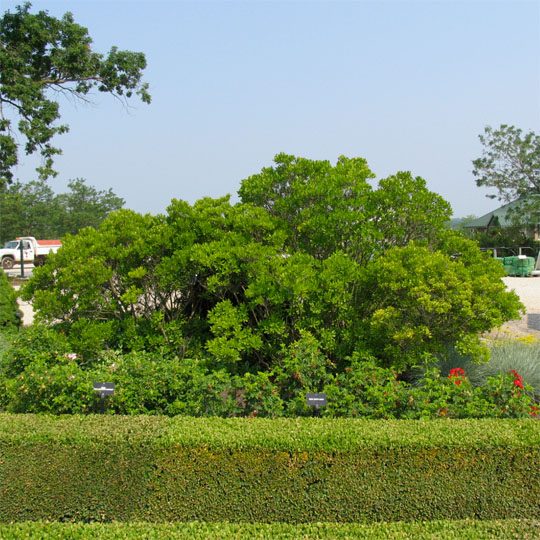
Myrica Pensylvanica Northern Bayberry: A Resilient Native Shrub for Diverse Sites
Myrica pensylvanica northern bayberry, a deciduous to semi-evergreen native shrub in the Myricaceae family, is a versatile landscape element available at our Mundelein nursery. For homeowners in Libertyville or Northfield looking to add a salt-tolerant, aromatic woody plant to their properties, this species is a functional choice. Its ability to grow in nutrient-poor soils and its production of waxy, persistent berries make it a steady performer in any North Suburb garden where screening and ecological utility are the primary goals.
Performance in Northern Illinois Soil
This species is hardy in our Zone 5b climate and is a representative selection for Midwest coastal areas, highway embankments, and residential rain gardens. While many ornamental shrubs struggle with the heavy, unyielding clay found throughout the region, the Myrica pensylvanica northern bayberry grows well in it, demonstrating a particular tolerance for high-stress environments. It is successful in the open, often wind-swept landscapes of Northfield, where its deep root system can anchor firmly in various soil textures. In Vernon Hills, these plants act as a durable architectural staple, emerging with leathery, grayish-green leaves that provide a dense, opaque screen throughout the growing season.
Size, Spacing, and Growth Habit
Planning for the upright and eventually spreading nature of this shrub ensures it provides the intended visual mass without requiring excessive maintenance or being easily crowded out by larger trees:
-
Average Height: Depending on the soil quality and light levels, the plant typically reaches 5 to 10 feet tall.
-
Average Width: Most mature specimens develop a footprint spanning 5 to 10 feet wide, often forming a rounded or irregular mounded silhouette.
-
Spacing Requirements: To create a solid privacy hedge or a continuous windbreak, space plants 4 to 6 feet apart from center to center. This allows the root systems to interlace and the foliage to form a seamless canopy that effectively suppresses weeds.
Characteristics of Northern Bayberry
In the North Suburbs, this group of shrubs serves as a source of seasonal interest and functional landscape support, addressing several specific gardening requirements:
-
Aromatic Foliage and Fruit: The most notable trait of this plant is the scent of its leaves and berries. When crushed, the foliage releases a spicy, clean aroma. This characteristic is commonly utilized to add a sensory element near walkways or seating areas.
-
Waxy Winter Berries: Following the inconspicuous spring flowers, female plants produce clusters of small, silver-gray berries coated in a thick wax. This wax was historically used to make bayberry candles. The berries persist through the winter, providing a subtle color contrast against the snow.
-
Exceptional Salt Tolerance: It is remarkably resistant to both soil salinity and salt spray. This makes it a practical choice for planting near roadsides, driveways, or sidewalks that receive heavy winter salt applications.
-
Wildlife Value: The waxy berries are a high-energy food source for many bird species, including Yellow-rumped Warblers and Tree Swallows, particularly during their autumn migration or throughout the winter months.
Planting and Maintenance Advice
To ensure your shrub remains healthy and maintains its dense, mounded habit each year, follow these straightforward care steps:
-
Light Exposure: Myrica pensylvanica northern bayberry is adaptable to light. While it grows well in partial shade, full sun (at least 6 hours) is required to achieve the highest density of foliage and the most prolific berry production.
-
The "Male-to-Female" Ratio: This species is primarily dioecious, meaning individual plants are either male or female. If your goal is to have the silver-gray berries, you must plant at least one male pollinator in the vicinity of several female plants.
-
Prioritize Drainage: While it is adaptable to many soil types, proper drainage is a functional necessity. The plant will not thrive in stagnant, standing water, which can lead to root rot.
-
Minimal Pruning Needs: It naturally maintains a balanced, mounded shape and requires very little intervention. If pruning is required to remove dead wood or to manage size, it should be done in late winter or very early spring before new growth begins.
-
Managing Suckers: The plant has a natural tendency to spread slowly by underground runners (suckers). In a naturalized screen, this is beneficial for filling in gaps, but in a formal border, these can be easily pruned away at the base once a year.
Frequently Asked Questions (Lake County Edition)
Is it an evergreen?
In our Zone 5b climate, Northern Bayberry is typically deciduous, though it can be semi-evergreen in sheltered locations during mild winters. The leaves often turn a bronze or purplish-brown in the fall and may cling to the branches for several months before dropping.
Can I make candles from the berries?
While the wax from the berries is the authentic source for bayberry candles, it takes a significant amount of berries to produce a single candle. Most gardeners prefer to leave the berries on the plant as a decorative winter element and a food source for local birds.
Visit The Country Bumpkin Garden Center
We are located at the corner of Gilmer Rd & Hawley St in Mundelein. Stop by to see the unique texture and experience the fragrance of Myrica pensylvanica northern bayberry in person and find the right fit for your landscape. We are a local resource for gardeners across Mundelein, Libertyville, and the surrounding communities.
Call (847) 566-2176 or Send a Message to check current availability.
Varieties: Northern Bayberry
See: Shrubs and Roses
Category: Sun Perennials - Sun Plants - Sunny Plants - Shrubs - Deciduous Shrubs - Northern Bayberry near me - Myrica pensylvanica