white currant
Ribes Rubrum 'Blanka'
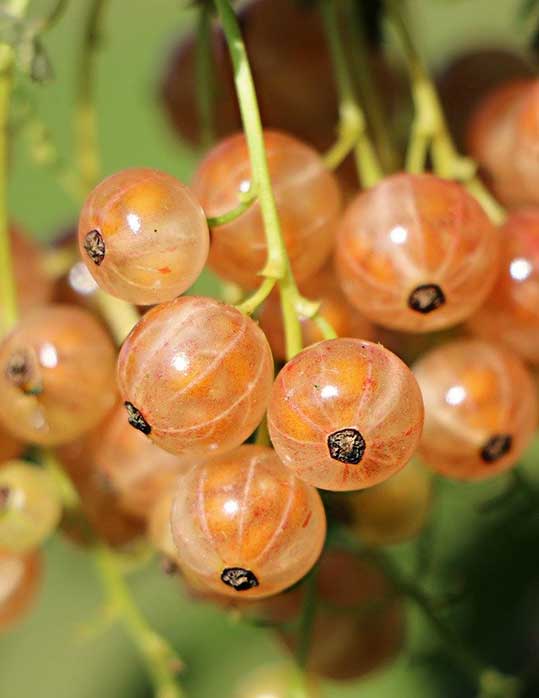
White Currant: A Translucent and Sweet Jewel for Illinois Gardens
White currant (Ribes rubrum), a deciduous fruiting shrub in the Grossulariaceae family, is a centerpiece for Midwest edible landscapes available at our Mundelein nursery. Technically a color variant of the red currant, white cultivars were selected for their lower acidity and higher sugar content. For homeowners in Wauconda or Island Lake looking to add a reliable source of fruit and a tidy architectural presence to their properties, this shrub is a practical choice. Its ability to produce clusters of translucent, pearl-like berries and its compact growth habit make it a steady performer in any North Suburb garden where functional food production and ornamental appeal are the primary goals.
Performance in Northern Illinois Soil
This species is exceptionally hardy in our Zone 5b climate and is a representative selection for residential gardens throughout the region. While many fruit plants struggle with the heavy, unyielding clay and variable moisture levels found throughout Lake County, the white currant grows well in it, provided the soil is amended with organic matter to improve drainage. It is successful in the partially shaded landscapes of Island Lake, as currants are one of the few fruiting shrubs that can produce a crop in less than full sun. In Wauconda, these shrubs act as a durable architectural staple, emerging with lobed, maple-like green leaves in the spring that provide a lush, textured backdrop throughout the summer months.
Size, Spacing, and Growth Habit
Planning for the mature dimensions and branching nature of this shrub ensures it provides the intended fruit yield without requiring excessive maintenance or being easily crowded out:
-
Average Height: This shrub typically reaches 3 to 5 feet tall at maturity.
-
Average Width: The canopy spread typically spans 3 to 5 feet wide, maintaining a dense and upright form.
-
Growth Rate: It features a moderate growth rate, focusing energy on developing a strong root system and productive fruiting wood.
-
Growth Habit: White currants grow as multi-stemmed shrubs. They produce fruit on wood that is two to three years old, requiring a simple rotation of stems to keep the plant productive.
-
Spacing Requirements: To ensure proper light penetration and airflow—which is essential for fruit ripening and disease prevention—space shrubs at least 3 to 4 feet apart from center to center. This distance is commonly utilized to create a functional fruiting hedge or border.
Pollination and Compatibility
Understanding the reproductive requirements of the white currant is a key step for a successful harvest, especially for gardeners with limited square footage.
-
Self-Fertility: White currants are self-fertile, meaning a single plant can produce a full crop of fruit without a partner. This is a practical advantage for homeowners who only have room for one or two shrubs in their landscape.
-
The Pollination Process: Pollen is transferred between flowers on the same plant primarily by bees and other small pollinators. This internal cross-pollination is a standard requirement for the fertilization of the blossoms.
-
Pollinator Attraction: The inconspicuous greenish-yellow flowers in spring are commonly visited by early-season beneficial insects, supporting the overall health of your garden.
-
Yield Synergy: While not required, planting multiple shrubs or different cultivars (such as 'Blanka' or 'Pink Champagne') can commonly lead to larger individual berries and a more extended harvest window.
Characteristics of White Currants
In the North Suburbs, this fruit shrub serves as a source of mid-summer interest and functional landscape support, addressing several specific gardening requirements:
-
Harvest Timing: White currants are a mid-summer variety. In our Illinois climate, they are commonly harvested in late June or July. The fruit is ready when the berries are fully translucent and separate easily from the stem.
-
Fruit Quality: The fruit is noted for its beautiful, translucent skin that allows the tiny seeds inside to show through. The flavor is sweeter and less astringent than red or black currants. This characteristic is commonly utilized for fresh eating, garnishing desserts, and making clear jellies.
-
Texture: The berries are thin-skinned and juicy, offering a delicate "pop" when eaten fresh from the shrub.
-
Bird Deterrence: Because the berries do not turn bright red, they are commonly less noticed by birds than red currants, which is a practical benefit for homeowners hoping to harvest the majority of the crop themselves.
-
Nutritional Value: Like all Ribes species, white currants are a functional source of Vitamin C and antioxidants, providing a healthy addition to the home diet.
Planting and Maintenance Advice
To ensure your shrub remains healthy and produces a prolific amount of fruit each year, follow these straightforward care steps:
-
Sun and Shade: While currants prefer full sun (6+ hours), they are commonly more successful in Northern Illinois if they receive some afternoon shade during the hottest parts of July and August.
-
Pruning for Structure: Annual maintenance pruning in late winter is a practical necessity. Focus on removing any wood older than three years and thinning out the weakest new shoots to maintain an open, productive crown.
-
Soil and Moisture: The shrub requires consistent moisture and does not tolerate drought well. Maintaining even moisture in the soil is a primary requirement during the berry-swelling stage in June.
-
Mulching: Maintain a 3-inch layer of organic mulch around the root zone, keeping it several inches away from the stems. This is a practical step to retain moisture and keep the root system cool, which is essential for currants.
-
Fertilization: A light application of compost or a balanced organic fertilizer in early spring is a practical maintenance step to support vigorous new growth.
Frequently Asked Questions (Lake County Edition)
Are white currants easier to grow than grapes?
In our heavy clay soils, white currants are commonly easier to manage than grapes because they require less intensive pruning and are more tolerant of partial shade.
Can I grow white currants in a container?
Yes. Their compact size makes them a practical choice for large pots on a patio, provided they are watered regularly and protected from the harshest afternoon sun.
Visit The Country Bumpkin Garden Center
We are located at the corner of Gilmer Rd & Hawley St in Mundelein. Stop by to see the sturdy structure and experience the potential of a white currant for your own backyard orchard and find the right fit for your landscape. We are a local resource for gardeners across Mundelein, Wauconda, Island Lake, and the surrounding communities.
Call (847) 566-2176 or Send a Message to check current availability.
Category: Fruit Plants - White Currant near me - Ribes Rubrum Blanka