viburnum
Viburnum varieties
Viburnum: A Multi-Seasonal Genus for the Illinois Landscape
Viburnum, a diverse genus of approximately 150 species of deciduous and evergreen shrubs in the Adoxaceae family, is a foundational element in Midwest horticulture available at our Mundelein nursery. For homeowners in Long Grove or Lake Zurich looking to add substantial floral interest, structural foliage, and ecological value to their properties, this genus is a functional choice. Its ability to provide multi-seasonal transitions—from spring blossoms to autumn fruit and foliage—makes it a steady performer in any North Suburb garden where year-round definition and reliable garden performance are the primary goals.
Performance in Northern Illinois Soil
This genus is hardy in our Zone 5b climate and is a representative selection for residential foundation plantings, informal privacy screens, and mixed shrub borders. While many ornamental shrubs struggle with the heavy, unyielding clay and variable drainage found throughout the region, many viburnum varieties grow well in it, demonstrating a particular tolerance for the alkaline soil typical of Lake County. It is successful in the established, wind-protected landscapes of Lake Zurich, where its root system can anchor firmly in cool, mulched soil. In Long Grove, these plants act as a durable architectural staple, emerging with textured leaves in the spring that provide a lush, opaque backdrop for the landscape throughout the growing season.
Size, Spacing, and Growth Habit
Planning for the mature dimensions and diverse habits of this genus ensures that these shrubs provide the intended visual mass without outgrowing their allotted space:
-
Arrowwood Viburnum (Viburnum dentatum): This upright, multi-stemmed native typically reaches 6 to 10 feet tall and 6 to 10 feet wide, making it a functional choice for screening.
-
Koreanspice Viburnum (Viburnum carlesii): Known for its intense fragrance, this slower-growing variety typically reaches 4 to 6 feet tall and 4 to 7 feet wide with a rounded habit.
-
Blackhaw Viburnum (Viburnum prunifolium): A large, tree-like shrub that can reach 12 to 15 feet tall and 8 to 12 feet wide, providing substantial vertical interest.
-
Judd Viburnum (Viburnum x juddii): Reaches 6 to 8 feet tall and 6 to 10 feet wide, featuring a broad, rounded silhouette and high floral fragrance.
-
Spacing Requirements: For hedge or screen applications, space plants at a distance equal to their mature width or slightly less for a denser look. For individual specimen use, ensure a 5-to-10-foot radius from buildings to allow the horizontal branching to develop fully.
Characteristics of Viburnums
In the North Suburbs, this group of plants serves as a source of seasonal transitions and functional landscape support, addressing several specific gardening requirements:
-
Diverse Floral Clusters: The genus produces flowers in three primary forms: flat-topped cymes, rounded "snowball" clusters, or lacecap-style blooms. This characteristic is commonly utilized to provide a high-impact focal point during the April and May window.
-
Aromatic Presence: Varieties like the Koreanspice or Judd produce an exceptionally strong, spicy-sweet fragrance. This characteristic is commonly utilized to add a sensory element near patios, entryways, or bedroom windows.
-
Pollinator and Wildlife Support: The nectar-rich flowers are highly attractive to bees and butterflies. Following the floral display, the plants produce drupes (fruit) ranging in color from red to blue-black. This characteristic is commonly utilized to provide a high-energy food source for local birds during the autumn and winter.
-
Distinctive Foliage Textures: The leaves range from the deeply veined, leathery foliage of the Wayfaring Tree to the smooth, glossy leaves of the Nannyberry. This structural diversity provides a functional contrast in a mixed shrub border.
-
Intense Autumn Color: Most deciduous varieties transition to brilliant shades of burgundy, purple, orange, or scarlet. This provides a late-season visual anchor before the leaves drop for the winter.
Planting and Maintenance Advice
To ensure your plant remains healthy and produces a prolific amount of flowers and fruit each year, follow these straightforward care steps:
-
Light and Exposure: Most viburnums perform best in full sun to partial shade. In our region, those planted in full sun (at least 6 hours of direct light) generally produce the densest foliage and the most abundant fruit and autumn color.
-
Soil and Drainage: While they are adaptable to clay, proper drainage is a mechanical necessity. The plant will not tolerate stagnant, standing water. In our heavy clay soil, slightly elevating the root ball at the time of planting is a functional strategy to ensure root health.
-
Pruning Timing: Because the plant blooms on "old wood," any pruning to shape the shrub should be done immediately after the flowers fade in the spring. Pruning too late in the season will remove the buds for the following year.
-
Pollination for Fruit: For varieties grown specifically for their berries (such as Arrowwood or Winterthur), it is commonly necessary to plant two different cultivars of the same species nearby to ensure successful cross-pollination.
-
Mulching: Maintain a 3-inch layer of organic mulch around the root zone, extending out to the drip line. This is a mechanical necessity to keep the soil cool and to retain the moisture levels required for healthy growth during the dry weeks of August.
Frequently Asked Questions (Lake County Edition)
Why isn't my viburnum producing berries?
The most common reason for a lack of fruit is a lack of cross-pollination. Many species require a genetically different individual of the same species blooming at the same time. If only one plant is present, or if multiple plants are identical clones, fruit production will be minimal.
Does it need a lot of water?
While established plants are relatively drought-tolerant, viburnums prefer consistent moisture. Providing supplemental water during the dry weeks of August is a practical maintenance step to prevent leaf scorch and ensure the health of the flower buds for the following spring.
Visit The Country Bumpkin Garden Center
We are located at the corner of Gilmer Rd & Hawley St in Mundelein. Stop by to see the various species and growth habits of viburnum in person—from the fragrant V. carlesii to the hardy V. dentatum—and find the right fit for your landscape. We are a local resource for gardeners across Mundelein, Long Grove, Lake Zurich, and the surrounding communities.
Call (847) 566-2176 or Send a Message to check current availability.
Viburnum carlesii (Korean Spice Viburnum):
Height: 4' - 6'
Width: 4' - 6'
Exposure: Partial shade to full sun
Fragrant pink to white flowers in spring.
Glossy green leaves turning shades of red and purple in fall.
Tolerant of various soil types.
Viburnum carlesii 'Spice Baby':
Height: 2' - 3'
Width: 2' - 3'
Exposure: Partial shade to full sun
Dwarf cultivar suitable for small gardens or containers.
Retains similar characteristics to the species but smaller in size.
Viburnum dentatum (Arrowwood Viburnum):
Height: 6' -10'
Width: 6' - 10'
Exposure: Full sun to partial shade
Creamy white flowers in late spring to early summer.
Blue-black berries in fall, attracting birds.
Dark green foliage turning shades of red and purple in fall.
Viburnum dentatum 'Blue Muffin':
Height: 5' - 7'
Width: 5' - 7'
Exposure: Full sun to partial shade
Compact cultivar with blue-black berries.
Glossy green foliage.
Viburnum dentatum 'Autumn Jazz':
Height: 6' - 8'
Width: 6' - 8'
Exposure: Full sun to partial shade
Notable for vibrant fall foliage.
Viburnum plicatum (Japanese Snowball Viburnum):
Height: 8' - 12'
Width: 8' - 12'
Exposure: Partial shade to full sun
Horizontal branching habit.
White lacecap-like flowers in spring.
Dark green leaves turning red-purple in fall.
Viburnum plicatum 'Opening Day':
Height: 8' - 10'
Width: 6' - 8'
Exposure: Partial shade to full sun
Notable for early spring flowers.
Typically taller than wide.
Viburnum plicatum 'Mariesii' (Doublefile Viburnum):
Height: 6' - 10'
Width: 6' - 12'
Exposure: Partial shade to full sun
Horizontal branching with tiers of white flowers.
Dark green leaves turning red in fall.
Viburnum trilobum (American Cranberrybush Viburnum):
Height: 6' - 12'
Width: 6' - 12'
Exposure: Full sun to partial shade
Upright, rounded shrub.
White flowers in spring followed by red berries in fall.
Tolerant of wet soils.
Viburnum opulus 'Sterile' (European Snowball Viburnum):
Height: 8' - 12'
Width: 8' - 12'
Exposure: Partial shade to full sun
Deciduous shrub with large, round clusters of sterile white flowers.
Dark green leaves turning shades of red in fall.
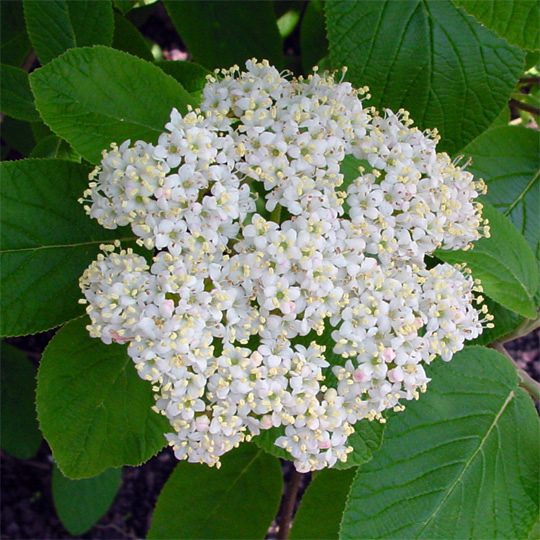
Ornamental value in gardens and landscapes.Image: Viburnum lantana ‘Mohican’
See: Shrubs and Roses
Category: Sun Perennials - Sun Plants - Sunny Plants - Shrubs - Deciduous Shrubs - Viburnum near me
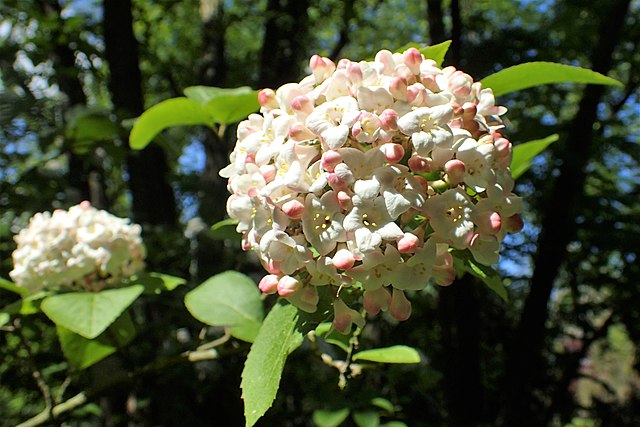
Image: Viburnum carlesii
Krzysztof Ziarnek, Kenraiz, CC BY-SA 4.0
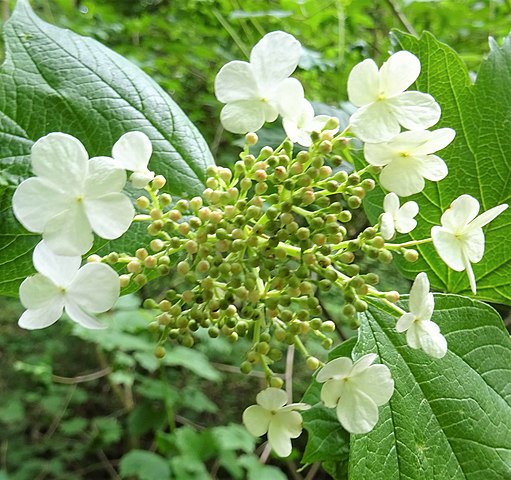
Image: Viburnum opulus
Rosser1954, CC BY-SA 4.0