stonecrop
Sedum - Stonecrop
Stonecrop: A Durable Succulent for the Illinois Landscape
Stonecrop, the common name for the genus Sedum, is a hardy, succulent perennial frequently stocked at our Mundelein nursery. For homeowners in Zion or Sylvan Lake looking to add thick, water-storing foliage and late-season flowers to their garden beds, this plant is a functional choice. Its ability to grow in poor soil and its resilience during dry spells make it a steady performer in any North Suburb garden where low-maintenance groundcover or structural interest is the primary goal.
Performance in Northern Illinois Soil
This perennial is hardy in our Zone 5b climate and is a reliable selection for Midwest landscapes. While many ornamental flowers struggle with the heavy, unyielding clay found throughout the region, stonecrop grows well in it, provided the site is well-drained. It is successful in the open, sun-drenched landscapes of Sylvan Lake, where its shallow root system can anchor firmly without requiring deep, rich topsoil. In Zion, these plants act as a durable landscape staple, emerging with fleshy, wax-coated leaves that remain present from early spring until the heavy frosts of late autumn.
Size, Spacing, and Growth Habit
Planning for the varied growth habits of this genus ensures it provides the intended coverage without being overcrowded by more aggressive perennials:
-
Average Height: Depending on the cultivar, creeping varieties reach only 2 to 6 inches tall, while upright types typically reach 18 to 24 inches tall.
-
Average Width: Each individual clump or mat forms a footprint of 12 to 24 inches wide, with some creeping types spreading indefinitely if left unchecked.
-
Spacing Requirements: To create a solid groundcover or a dense border, space plants 12 to 18 inches apart. This allows the succulent stems to expand while maintaining enough airflow to prevent fungal issues at the base.
Characteristics of Stonecrop
In the North Suburbs, this group of perennials serves as a source of multi-seasonal color and structural support, addressing several specific gardening requirements:
-
Diverse Foliage Textures: The leaves are thick and succulent, appearing in shades of lime green, blue-grey, burgundy, or variegated patterns. This provides visual interest even when the plant is not in bloom.
-
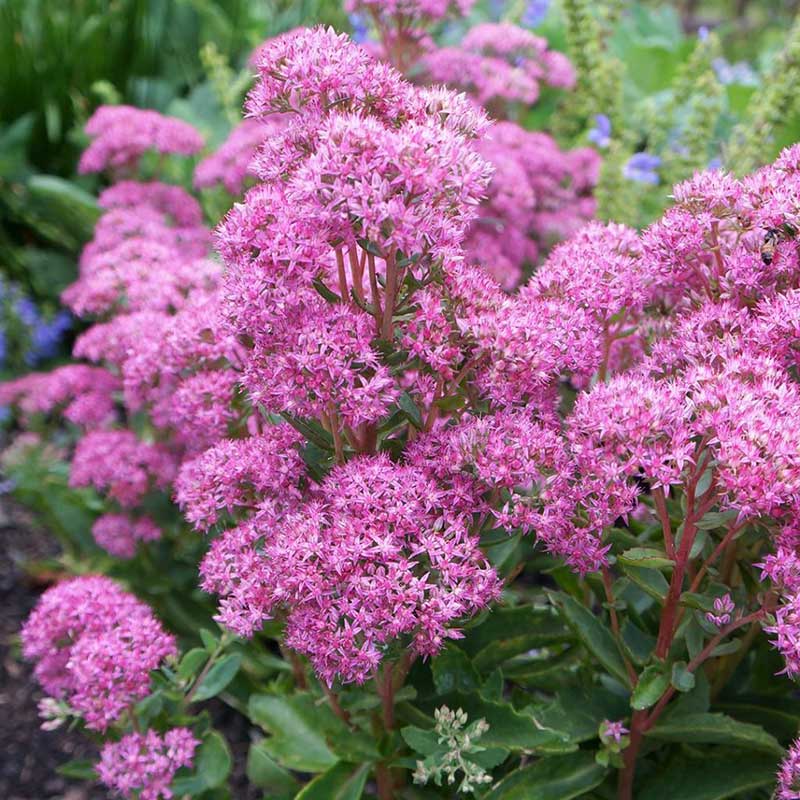
Late-Season Flower Production: Many upright varieties, such as 'Autumn Joy', produce flat-topped flower clusters that transition from green to pink and finally to a deep copper-red in late summer and fall.
-
Pollinator Support: The nectar-rich flowers are commonly visited by honeybees, bumblebees, and butterflies during the months when other nectar sources may be becoming scarce.
-
Exceptional Drought Tolerance: Once established, it is highly water-efficient, maintaining its health during the heat of August with significantly less supplemental irrigation than traditional herbaceous perennials.
Planting and Maintenance Advice
To ensure your plant remains healthy and returns with vigor each spring, follow these straightforward care steps:
-
Full Sun Exposure: This is the most critical factor for stem strength and foliage color. To prevent the plant from becoming leggy or losing its vibrant hues, provide at least 6 to 8 hours of direct, unobstructed light daily.
-
Soil and Drainage: While it is adaptable to clay, it will not grow in stagnant, standing water. In our heavy clay soil, ensure the planting site is well-drained, sandy, or slightly elevated to avoid crown rot, especially during wet winters.
-
Minimal Fertilizer: It grows best in average to lean soil. Excessive nitrogen can result in rapid, weak growth that causes upright varieties to split open or fall over under the weight of their own flower heads.
-
The "Chelsea Chop": For taller varieties, you can prune the stems back by half in early June. This practice results in a shorter, sturdier plant with more numerous flower heads that are less likely to flop later in the season.
-
Winter Management: Leave the dried flower heads of upright varieties standing through the winter. They provide architectural interest and can support the weight of light snow, adding a structural element to the dormant garden.
Frequently Asked Questions (Lake County Edition)
Can I grow it in the shade?
While it will grow, it will likely become leggy, lose its compact shape, and produce fewer flowers. For the best health and color in our region, a full sun location is recommended.
How do I propagate my plants?
Stonecrop is easy to multiply. You can simply break off a stem or a leaf, let it dry for a day, and stick it into moist, well-drained soil. It will typically take root and begin growing a new plant within a few weeks.
Visit The Country Bumpkin Garden Center
We are located at the corner of Gilmer Rd & Hawley St in Mundelein. Stop by to see the various cultivars of stonecrop in person—from low-growing rock garden types to tall, late-blooming border varieties—and find the right fit for your sun-drenched landscape. We are a local resource for gardeners across Mundelein, Volo, and the surrounding communities.
Call (847) 566-2176 or Send a Message to check current availability.
Image: Sedum ‘Carl’
See: Perennials
Category: Sun Perennials - Sun Plants - Sunny Plants - Stonecrop near me - Sedum