shooting star
Dodecatheon Meadia - Primula Meadia - Shooting Star
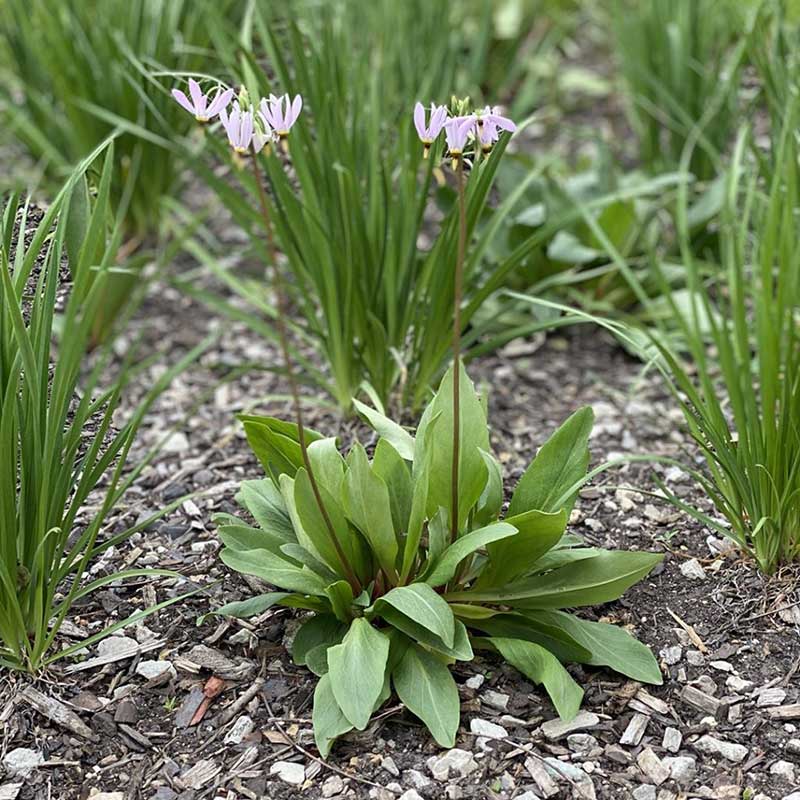
Shooting Star (Dodecatheon meadia): An Illinois Woodland Treasure
Dodecatheon meadia, most commonly known as the shooting star, is one of the most enchanting native wildflowers we carry at our Mundelein nursery. For homeowners in Wildwood or Winthrop Harbor looking to add a touch of authentic Illinois prairie or woodland heritage to their spring landscape, this plant is an essential choice. Its unique, swept-back petals and elegant form make it a premier performer in any North Suburb garden that values seasonal diversity and native beauty.
Performance in Northern Illinois Soil
This perennial is remarkably hardy in our Zone 5b climate, as it has evolved specifically for the Midwestern environment. While many ornamental plants struggle with the heavy, unyielding clay found throughout the region, the shooting star is perfectly adapted to it, provided the soil remains moist during the spring months. It is particularly successful in neighborhoods like Wildwood, where mature oaks and maples provide the dappled sunlight that mimics its natural forest-edge habitat.
For the best results, plant it in partial shade to full sun. In the wild, these plants often grow in open savannas where they receive bright light before the tree canopy fully fills in. In a typical Winthrop Harbor garden, they thrive in spots that are damp in April and May but become drier as the plant enters its natural summer dormancy.
Why this Native Wildflower is a Practical Local Choice
In the North Suburbs, this group of perennials serves as a vital link to the local ecosystem, solving several specific gardening challenges:
-
Early Season Color: Blooming in late April and May, it provides a sophisticated burst of white, pink, or lavender just as the garden is waking up.
-
Pollinator Specialist: The flowers are specifically designed for "buzz pollination" by native bumblebees, making it a critical resource for local bee populations in Wildwood.
-
Deer Resistance: Despite its delicate appearance, the foliage of the shooting star is generally ignored by the deer and rabbits that frequent properties near the local forest preserves.
-
Low Profile: Because the leaves stay in a low, flat rosette and the flower stalks are slender, it is an ideal choice for planting underneath larger shrubs or among delicate ferns.
Planting and Maintenance Advice
To ensure your shooting star establishes successfully and returns each spring, follow these straightforward care steps:
-
Understand Dormancy: This is the most critical factor. Like many spring ephemerals, the plant will disappear completely by mid-July. Do not dig in that spot, as the roots are simply resting underground until next year.
-
Mark the Spot: Because the plant goes dormant, it is a great idea to use a small stone or permanent marker in your Winthrop Harbor garden so you don't accidentally plant something else on top of it later in the summer.
-
Consistent Spring Moisture: While they can handle summer drought during dormancy, they need consistent moisture while they are actively growing and flowering in May.
-
Mulching: Apply a thin layer of leaf mold or wood mulch around the base to keep the soil temperature stable, but avoid heavy wood chips that might smother the small leaf rosettes.
-
No Fertilizer Needed: As a native plant, it is adapted to local nutrient levels. A simple top-dressing of compost in the autumn is all the energy a shooting star needs to thrive.
Reliable Companion Plants for our Area
To create a pleasant, multi-layered look in the garden, consider pairing Shooting Star with these specific varieties:
-
Virginia Bluebells: These two native spring favorites share the same blooming window and habitat preferences. The soft, sky-blue clusters of the Bluebells provide a gentle color contrast to the swept-back pink or white petals of the Shooting Star, creating a classic woodland floor aesthetic.
-
Trillium: The bold, three-leaved structure of Trillium offers a solid, architectural base that highlights the delicate, nodding stems of Shooting Star. Both plants thrive in the dappled light and rich, organic soils of early spring, disappearing into dormancy together as summer heat arrives.
-
Wild Ginger: This low-growing native groundcover provides a lush, heart-shaped leaf canopy that protects the soil and keeps roots cool. The matte green foliage of the ginger creates a consistent, textured backdrop that allows the unique, rocket-like blooms of the Shooting Star to stand out.
-
Maidenhair Fern: The airy, swirling fronds of the Maidenhair Fern offer an ethereal, fine-textured companion. As the Shooting Star blooms reach their peak, the emerging fern fronds add a layer of delicate greenery that fills the void left when the foliage goes dormant in late June.
Frequently Asked Questions (Lake County Edition)
Why did my plant disappear in July?
Don't worry! This is a natural part of the life cycle. The shooting star is an "ephemeral," meaning it goes to sleep once the summer heat arrives to conserve energy for next spring.
Is it hard to grow?
Not if you have the right location. If you have a spot in your Wildwood yard that is moist in the spring and shaded in the summer, this plant will be very low-maintenance.
Visit The Country Bumpkin Garden Center
We are located at the corner of Gilmer Rd & Hawley St in Mundelein. Stop by to see the unique, reflexed petals of the shooting star in person and learn more about incorporating native plants into your landscape. We are proud to be a local resource for gardeners across Mundelein, Winthrop Harbor, and the surrounding communities.
Call (847) 566-2176 or Send a Message to check current availability.
See: Perennials
Category: Sun Perennials - Sun Plants - Sunny Plants - Shooting Star near me - Dodecatheon meadia