salix
Salix - Dappled Willow - Nishiki - Pussy Willow
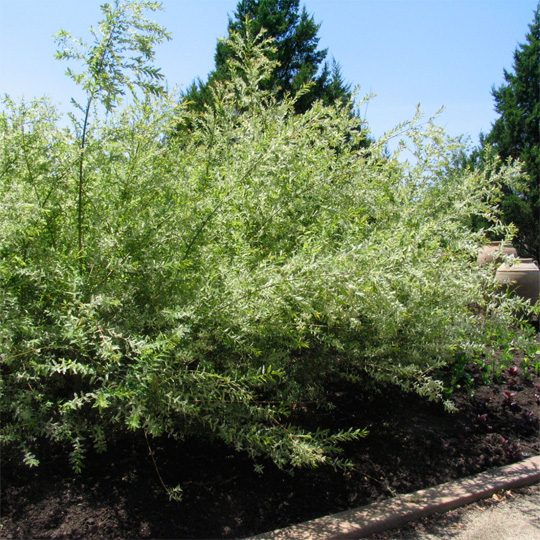
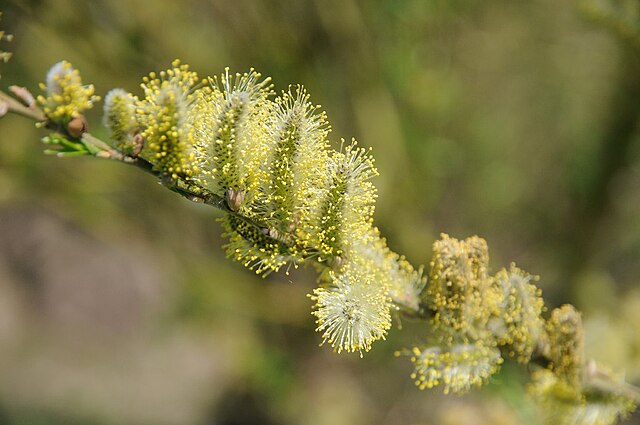
Pussy willow catkins
Image: Pussy willow catkins by Philip Halling, CC BY-SA 2.0 <https://creativecommons.org/licenses/by-sa/2.0>, via Wikimedia Commons
Salix Willow: A Moisture-Tolerant Genus for Structural and Ornamental Landscapes
Salix willow, a diverse genus of deciduous trees and shrubs in the Salicaceae family, is a foundational element in Midwest landscaping available at our Mundelein nursery. For homeowners in Mundelein or Vernon Hills looking to manage wet soil or add a distinct, fine-textured presence to their properties, this genus is a functional choice. Its ability to grow rapidly and its resilience in saturated ground make it a steady performer in any North Suburb garden where seasonal transitions and reliable soil stabilization are the primary goals.
Performance in Northern Illinois Soil
This genus is hardy in our Zone 5b climate and is a representative selection for Midwest rain gardens, pond edges, and low-lying residential borders. While many ornamental shrubs struggle with the heavy, unyielding clay and seasonal saturation found throughout the region, Salix willow varieties grow well in it, provided the site maintains consistent moisture levels. It is successful in the naturally damp, lower-elevation landscapes of Vernon Hills, where its expansive root system can handle the seasonal fluctuations of the local water table. In Mundelein, these plants act as a durable architectural staple, emerging with fuzzy catkins or variegated foliage in the spring that provide a soft, airy backdrop for the garden throughout the summer months.
Size, Spacing, and Growth Habit
Planning for the vigorous and multi-stemmed nature of these shrubs and trees ensures they provide the intended visual mass without encroaching on structures or requiring excessive maintenance to keep them away from underground utilities:
-
Dappled Willow / Hakuro Nishiki (Salix integra 'Albomaculata'): Typically reaches 4 to 6 feet tall and 4 to 6 feet wide, often maintained as a rounded shrub or a small grafted tree (standard).
-
Pussy Willow (Salix discolor): A native species that typically reaches 6 to 15 feet tall and 4 to 12 feet wide, featuring an upright, spreading habit that can be trained as a large shrub or a small multi-stemmed tree.
-
Growth Rate: Willows are recognized for their rapid growth, often putting on several feet of new wood in a single season.
-
Spacing Requirements: For hedge or screen applications, space plants 4 to 6 feet apart. For individual specimens, leave a gap of at least 8 feet from the mature width of neighboring plants to allow for full branch extension and airflow.
Characteristics of Salix Willows
In the North Suburbs, this group of plants serves as a source of early spring interest and functional landscape support, addressing several specific gardening requirements:
-
Distinctive Spring Catkins: The Pussy Willow is noted for its soft, silvery, fur-like flower clusters that appear in late winter or very early spring. This characteristic is commonly utilized to provide the first sign of garden renewal before other deciduous plants have broken dormancy.
-
Variegated Foliage: The 'Nishiki' or Dappled Willow produces new growth in shades of pink, white, and green. This characteristic is commonly utilized to provide a high-contrast, bright element in the landscape during the summer months.
-
Moisture Management: These plants have a high transpiration rate and an aggressive root system. They are a functional choice for stabilizing banks or absorbing excess water in areas of the yard that stay consistently wet.
-
Winter Stem Color: Many willow varieties, including the Dappled Willow, feature bright red or orange stems that become highly visible once the leaves drop. This provides a structural color element against the winter snow.
-
Wildlife Support: As early bloomers, willows provide a critical source of pollen and nectar for bees and other pollinators emerging in the cool temperatures of March and April.
Planting and Maintenance Advice
To ensure your plant remains healthy and maintains its vibrant color each year, follow these straightforward care steps:
-
Sun and Moisture Requirements: Salix willow performs best in full sun (at least 6 hours of direct light) and requires consistent moisture. While they can handle some dry periods once established, they will show leaf scorch or premature leaf drop if the soil dries out completely during the dry weeks of August.
-
Hard Pruning for Color: For varieties like the Dappled Willow, the brightest pink and white colors appear on new growth. A practical maintenance strategy is to perform "coppicing"—cutting the plant back significantly in late winter—to encourage a fresh flush of colorful stems and leaves.
-
Site Selection and Infrastructure: Because willow roots are aggressive and moisture-seeking, a functional necessity is to plant them at least 15 to 20 feet away from septic fields, sewer lines, and water pipes to prevent root intrusion.
-
Managing Size: Since willows grow quickly, they can become leggy if left unmanaged. Pruning once or twice a year is a practical way to maintain a tidy, mounded shape in a residential border.
-
Mulching: Maintain a 3-inch layer of organic mulch around the root zone. This is a mechanical necessity to retain soil moisture and keep the roots cool, mimicking the natural riparian environments where willows originate.
Frequently Asked Questions (Lake County Edition)
Why is my Dappled Willow turning all green?
The variegated pink and white colors are most intense on new growth and in full sun. If the plant is in too much shade, or if it hasn't been pruned recently, the older leaves will revert to a solid green color. Hard pruning in the spring is a practical solution to restore the color.
Are willow branches good for indoor arrangements?
Yes. Both Pussy Willow catkins and Dappled Willow stems are commonly used in floral arrangements. Pussy Willow branches can be cut in late winter and brought indoors to "force" the catkins to open early.
Visit The Country Bumpkin Garden Center
We are located at the corner of Gilmer Rd & Hawley St in Mundelein. Stop by to see the various colors and growth habits of Salix willow in person—from the classic Pussy Willow to the vibrant Dappled 'Nishiki'—and find the right fit for your landscape. We are a local resource for gardeners across Mundelein, Vernon Hills, and the surrounding communities.
Call (847) 566-2176 or Send a Message to check current availability.
See: Shrubs and Roses
Category: Sun Perennials - Sun Plants - Sunny Plants - Shrubs - Deciduous Shrubs - Dappled Willow near me - Salix