russian sage
Perovskia
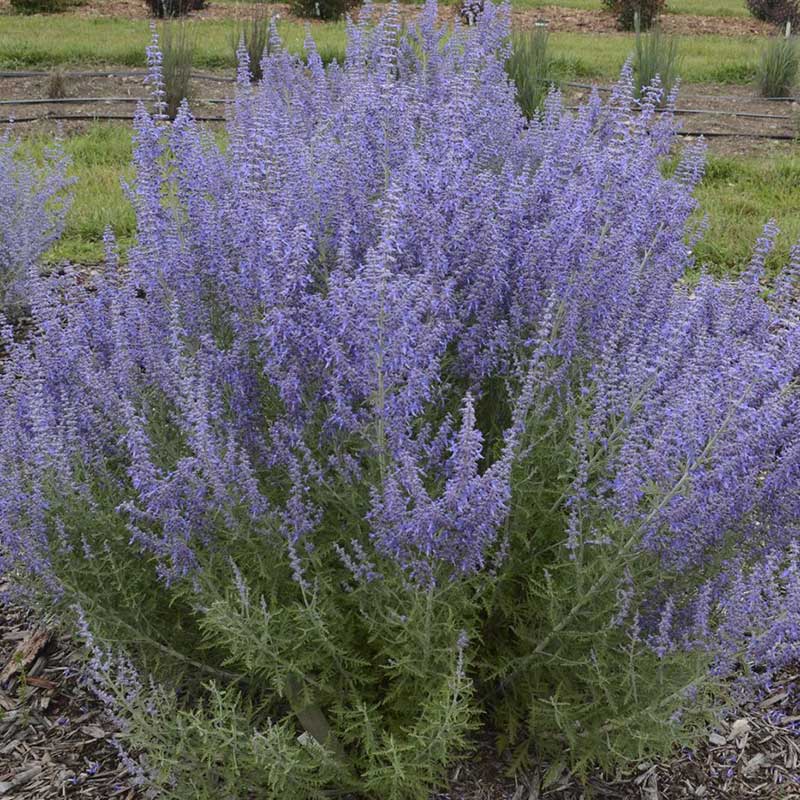
Russian Sage: The Hazy Blue Heat-Seeker of Lake County
Russian sage (Salvia yangii, formerly Perovskia atriplicifolia) is the most drought-tolerant and airy structural perennial we offer at our Mundelein nursery. For homeowners in Libertyville or Long Grove looking to add a cloud of lavender-blue flowers and silvery, aromatic foliage to their hottest, driest garden beds, this plant is an absolute necessity. Its ability to thrive in poor soil and its rigid, silver stems make it a premier performer in any North Suburb garden where high-impact summer color and low-maintenance durability are the priorities.
Performance in Northern Illinois Soil
This perennial is exceptionally hardy in our Zone 5b climate and is a true champion of the sun-baked landscape. While many garden plants struggle with the heavy, unyielding clay found throughout the region, Russian sage is remarkably adaptable, provided the site is exceptionally well-drained. It is particularly successful in the open, breezy properties of Long Grove, where its deep root system can anchor into the earth and handle the transition from a cool, wet spring to the intense, reflective heat of an Illinois July. In Libertyville, these plants act as a durable "landscape screen," emerging with finely textured, serrated leaves that provide a cooling, silvery aesthetic long before the first blue spires appear.
Size, Spacing, and Growth Habit
Planning for the expansive, shrub-like habit of this plant is key to ensuring it fills its space without overwhelming smaller neighbors:
-
Average Height: Depending on the variety, mature plants typically reach 3 to 4 feet tall. Compact "dwarf" versions like 'Little Spire' or 'Blue Jean Baby' stay shorter at 18 to 24 inches.
-
Average Width: These are substantial perennials, forming a wide, billowy mound spanning 2 to 4 feet wide.
-
Spacing Requirements: To ensure vital air circulation and allow room for the stems to arch gracefully, space plants at least 3 feet apart.
Why Russian Sage is a Practical Local Choice
In the North Suburbs, this group of perennials serves as a reliable source of late-season drama and high-end texture, solving several specific gardening challenges:
-
Incredible Bloom Window: Very few plants can match its flowering duration. It begins blooming in July and maintains its hazy blue cloud until the first hard frost in October.
-
Superior Drought Tolerance: Once established, it is one of the most water-efficient plants in our catalog, thriving in "hell strips" along sidewalks or in sandy, rocky soils where other plants wilt.
-
Deer and Rabbit Resistance: Because of the strong, herbal scent of the foliage (similar to sage or lavender), it is almost never touched by local wildlife.
-
Pollinator Magnet: The tiny tubular flowers are a constant draw for honeybees, bumblebees, and hummingbirds during the peak of summer.
Planting and Maintenance Advice
To ensure your plant remains a vibrant focal point and maintains its upright, silvery structure, follow these straightforward care steps:
-
Full Sun is Mandatory: This is the most critical factor. To prevent the stems from becoming "floppy" or sparse in the center, provide at least 6 to 8 hours of direct, unobstructed light.
-
The "Late Spring Cut": Do not cut the plant back in the fall. Wait until late March or April, when you see new green growth at the base. Cut the old woody stems back to about 6 inches. This results in a sturdier, more upright plant.
-
Prioritize Drainage: While it is tough, it will not tolerate "wet feet" during the winter. In our heavy clay soil, planting on a slight mound or adding grit to the hole is highly recommended.
-
Avoid Over-Fertilizing: It thrives in "lean" soil. Too much nitrogen or rich organic matter will result in rapid, weak growth that causes the plant to split open and fall over.
-
Minimal Watering: Once the plant has completed its first full season in your garden, it should only require supplemental water during extreme, multi-week droughts.
Frequently Asked Questions (Lake County Edition)
Is it actually a sage?
While it is in the Mint family and smells like sage, it is not the culinary herb used for cooking. It is strictly an ornamental plant used for its beauty and resilience.
Why is mine leaning over?
Leaning is usually caused by too much shade, too much fertilizer, or too much water. Ensure it is in the sunniest, driest spot in your garden for the best upright form.
Visit The Country Bumpkin Garden Center
We are located at the corner of Gilmer Rd & Hawley St in Mundelein. Stop by to see the incredible variety of Russian sage we carry—from the towering classic species to the tidy, garden-friendly dwarf cultivars. We are proud to be a local resource for gardeners across Mundelein, Libertyville, and the surrounding communities.
Call (847) 566-2176 or Send a Message to check current availability.
Image: Perovskia ‘Denim ‘n Lace’
See: Perennials
Category: Sun Perennials - Sun Plants - Sunny Plants - Russian sage near me - Perovskia