meadow rue
Thalictrum Aquilegiifolium - Meadow Rue
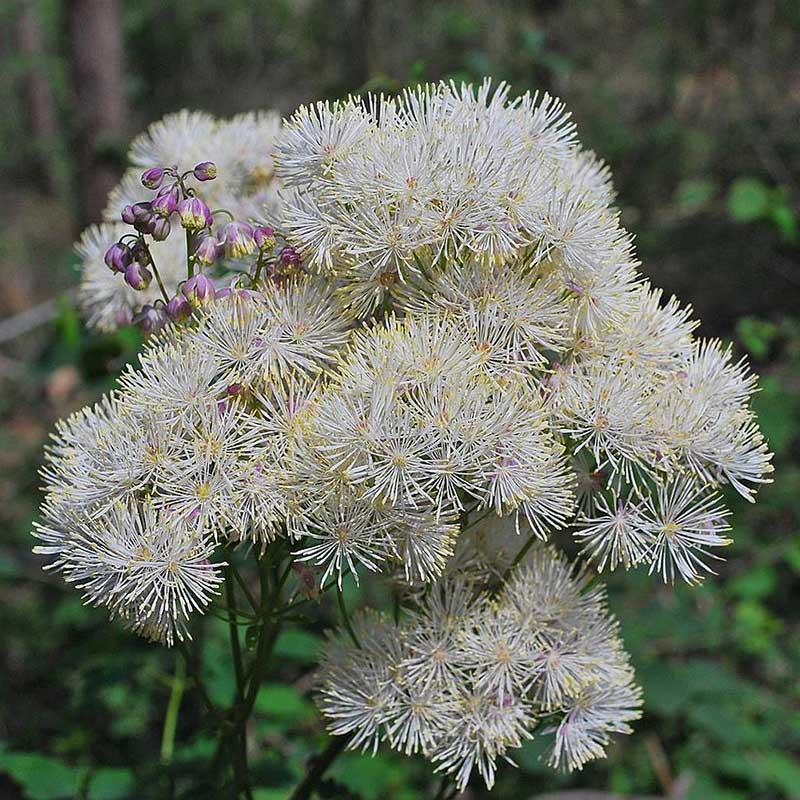
Meadow Rue: A Delicate Vertical Accent for Shaded Borders
Thalictrum aquilegiifolium, commonly known as meadow rue, is a tall, airy perennial in the buttercup family frequently stocked at our Mundelein nursery. For homeowners in Abbott Park or Antioch looking to add a cloud-like texture and blue-green foliage to their shaded landscapes, this plant is a functional choice. Its ability to grow in moist, rich soil and its distinctive puffball flowers make it a steady performer in any North Suburb garden where vertical interest and soft, fine-textured leaves are the primary goals.
Performance in Northern Illinois Soil
This perennial is hardy in our Zone 5b climate and is a reliable selection for Midwest woodland edges. While some ornamental flowers struggle with the heavy, moisture-retentive clay found throughout the region, meadow rue grows well in it, provided the site is enriched with organic matter. It is successful in the established, shaded landscapes of Antioch, where the soil remains cool during the summer months. In Abbott Park, these plants act as a durable architectural staple, emerging with columbine-like, compound leaves that remain present from early spring until the late frosts of autumn.
Size, Spacing, and Growth Habit
Planning for the tall and slender nature of this plant ensures it provides a vertical element without being overcrowded by denser shrubs:
-
Average Height: Depending on the cultivar and soil moisture, the flowering stems typically reach 3 to 4 feet tall. Some giant species in the genus can reach up to 6 feet in ideal conditions.
-
Average Width: Each individual clump forms a mounded base of foliage spanning 18 to 24 inches wide.
-
Spacing Requirements: To create a naturalized drift or a textured backdrop, space plants 18 to 24 inches apart. This allows the delicate flower panicles to expand while maintaining enough airflow to keep the stems healthy.
Characteristics of Meadow Rue
In the North Suburbs, this group of perennials serves as a source of early-summer color and structural support, addressing several specific gardening requirements:
-
Unique Flower Structure: Unlike traditional daisies, the flowers consist primarily of clusters of showy, petal-like stamens that create a "fuzzy" or cloud-like appearance in shades of lavender, pink, or white.
-
Durable Blue-Green Foliage: The leaves are deeply divided and resemble those of the Columbine (Aquilegia), providing a cooling, blue-toned aesthetic in the garden even when the plant is not in bloom.
-
Pollinator Support: The nectar-rich flower clusters are commonly visited by honeybees, hoverflies, and butterflies during the transition from late spring to early summer.
-
Shade Tolerance: This is one of the plants that thrives in partial shade or dappled light, making it a functional choice for the edges of wooded lots or the north side of a home where many sun-loving perennials would fail.
Planting and Maintenance Advice
To ensure your plant remains healthy and returns with vigor each spring, follow these straightforward care steps:
-
Consistent Moisture: This is the most critical factor for success. Meadow rue prefers soil that stays evenly moist. During a July drought, regular supplemental irrigation is necessary to prevent the leaf edges from browning or curling.
-
Soil Enrichment: It grows best in soil rich in organic matter. In our heavy clay soil, amending the planting hole with compost or leaf mold is recommended to mimic the nutrient-rich floor of its native woodland habitats.
-
Light Exposure: In our region, this plant maintains its best color and upright habit in partial shade. While it can handle more sun if the soil is kept very wet, direct, afternoon sun may scorch the delicate foliage.
-
Wind Protection: Because the flower stalks are tall and airy, they can be susceptible to blowing over during heavy spring thunderstorms. Planting them among other sturdy perennials or in a site protected from the wind is helpful.
-
Minimal Pruning: Once the flowers have faded in mid-summer, you can cut the flower stalks back to the basal foliage to maintain a tidy look. Wait until early spring to clear away the old leaves, as this provides a layer of protection for the crown during the winter.
Frequently Asked Questions (Lake County Edition)
Is it related to Columbine?
Yes. Both are in the Ranunculaceae (Buttercup) family. While the flowers look very different, the foliage is so similar that meadow rue is often mistaken for Columbine before it begins to bloom.
Does it need to be staked?
While the stems are surprisingly flexible, the taller varieties may benefit from a support hoop if they are planted in an exposed, windy area. Planting them in a mass or against a fence often provides enough natural support.
Visit The Country Bumpkin Garden Center
We are located at the corner of Gilmer Rd & Hawley St in Mundelein. Stop by to see the various cultivars of meadow rue in person—from the classic lavender varieties to the crisp white types—and find the right fit for your shaded landscape. We are a local resource for gardeners across Mundelein, Antioch, and the surrounding communities.
Call (847) 566-2176 or Send a Message to check current availability.
Varieties: Nimbus White.
Image: tsiegretlop, CC BY 2.0, via Wikimedia Commons
See: Perennials
Category: Semi-shade Perennials - Semi-shade Plants - Meadow rue near me - Thalictrum Aquilegiifolium