chaenomeles
Flowering Quince - Red Chief - Chaenomeles
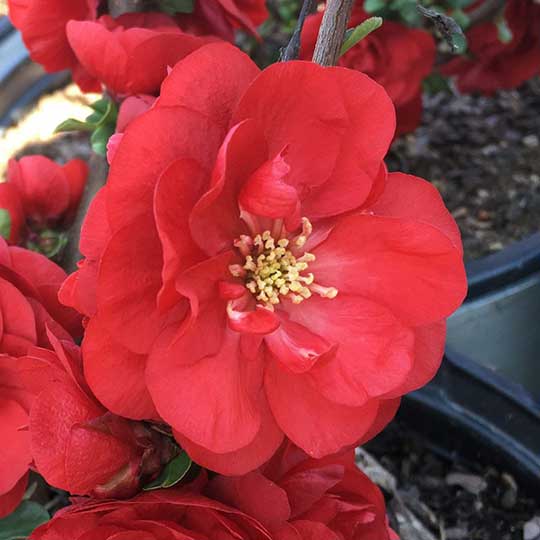
Chaenomeles Flowering Quince: A Structural Spring-Blooming Shrub for Illinois
Chaenomeles flowering quince, a genus of deciduous thorny shrubs in the Rosaceae family, is a durable woody plant available at our Mundelein nursery. For homeowners in Vernon Hills or Volo looking to add intense early-season color and a dense, structural barrier to their landscapes, this plant is a functional choice. Its ability to bloom on bare stems before the leaves fully emerge and its resilience in various soil conditions make it a steady performer in any North Suburb garden where early spring interest and low-maintenance longevity are the primary goals.
Performance in Northern Illinois Soil
This shrub is hardy in our Zone 5b climate and is a representative selection for Midwest foundation plantings and informal hedges. While many ornamental shrubs struggle with the heavy, unyielding clay found throughout the region, the Chaenomeles flowering quince grows well in it, provided the site is not subject to extreme, prolonged saturation. It is successful in the open, sun-drenched landscapes of Volo, where its deep root system can anchor firmly and support its spreading, woody frame. In Vernon Hills, these plants act as a durable architectural staple, emerging with vibrant blossoms in April that provide one of the first significant splashes of color in the Lake County landscape.
Size, Spacing, and Growth Habit
Planning for the mounded and often spreading nature of this shrub ensures it provides the intended visual mass without encroaching on walkways or requiring excessive pruning to stay within bounds:
-
Average Height: Depending on the cultivar, the height can vary from compact types at 2 to 3 feet tall to standard varieties that reach 6 to 10 feet tall.
-
Average Width: Most mature specimens develop a footprint spanning 3 to 10 feet wide, often spreading wider than they are tall if left unpruned.
-
Spacing Requirements: To create a solid, thorny hedge or a continuous color border, space plants 4 to 6 feet apart. This allows the tangled, woody branches to knit together, which is particularly useful if the plant is being used as a physical deterrent or a nesting site for birds.
Characteristics of Flowering Quince
In the North Suburbs, this group of shrubs serves as a source of seasonal transitions and structural support, addressing several specific gardening requirements:
-
Pre-Foliage Floral Display: The plant produces cup-shaped flowers—appearing in shades of scarlet, orange, pink, or white—that line the dark, woody stems before the leaves appear. This characteristic is commonly utilized to provide high-impact color while the rest of the garden is still waking up.
-
Thorny Defense Mechanism: The stems are armed with sharp spines. This makes the shrub a functional choice for planting under windows or along property lines where a natural security barrier is desired.
-
Pollinator Support: As one of the earliest blooming woody plants, it provides a vital nectar source for honeybees and emerging native pollinators during the unpredictable weather of a Midwest spring.
-
Autumn Fruit Production: In late summer and fall, the shrub produces small, hard, yellow-green fruits known as quinces. While too tart to eat raw, they are high in pectin and are commonly used in jellies and preserves.
Planting and Maintenance Advice
To ensure your shrub remains healthy and produces a prolific amount of flowers each year, follow these straightforward care steps:
-
Full Sun Exposure: This is the most critical factor for flower production. While the plant can grow in partial shade, it will produce significantly fewer blooms and may develop a more leggy, open habit. Provide at least 6 to 8 hours of direct light for the best results.
-
Pruning Cycles: Chaenomeles flowering quince blooms on "old wood" (growth from previous years). To avoid cutting off next year’s flower buds, any major pruning should be done immediately after the flowers fade in the spring. You can remove up to one-third of the oldest branches at ground level to rejuvenate the shrub and encourage fresh growth.
-
Soil and pH Considerations: While it is adaptable to clay, it prefers neutral to slightly acidic soil. In our alkaline Illinois soil, the plant may occasionally show signs of chlorosis (yellowing leaves). Amending the soil with organic matter or leaf mold at the time of planting is a practical way to manage this.
-
Drought Tolerance: Once the root system is established, typically by the third growing season, this shrub is remarkably drought-tolerant. It maintains its foliage well during the dry weeks of August with minimal supplemental irrigation.
-
Pest Resilience: It is generally resistant to deer and rabbits due to its thorny stems and leathery leaves, making it a low-maintenance option for properties near open fields.
Frequently Asked Questions (Lake County Edition)
Is the fruit edible?
Yes, but only after cooking. Raw quinces are extremely hard and astringent. They are most frequently used to make jams, as their high pectin content helps the preserves set naturally.
Why is my shrub losing leaves in the summer?
In hot, humid summers, quince can be susceptible to leaf spot. While this is rarely fatal, ensuring the plant is in full sun with good airflow and avoiding overhead watering can help keep the foliage healthy until the autumn.
Visit The Country Bumpkin Garden Center
We are located at the corner of Gilmer Rd & Hawley St in Mundelein. Stop by to see the various growth habits of Chaenomeles flowering quince in person—from the vibrant 'Double Take' series to traditional standard varieties—and find the right fit for your early-season landscape. We are a local resource for gardeners across Mundelein, Volo, and the surrounding communities.
Call (847) 566-2176 or Send a Message to check current availability.
Varieties: Orange Storm
See: Shrubs and Roses
Category: Sun Perennials - Sun Plants - Sunny Plants - Shrubs - Deciduous Shrubs - Flowering Quince - Chaenomeles