ceanothus americanus
New Jersey Tea - Mountain Snowbell - Ceanothus americanus
Ceanothus Americanus New Jersey Tea: A Hardy Native Shrub for the Illinois Prairie
Ceanothus americanus, commonly known as New Jersey tea, is a compact, deciduous native shrub in the buckthorn family that we carry at our Mundelein nursery. For homeowners in Spring Grove or Wildwood looking to add a resilient, pollinator-friendly woody plant to their sunny borders or naturalized areas, this shrub is a functional choice. Its ability to grow in challenging, dry soil and its history as a medicinal and beverage plant make it a steady performer in any North Suburb garden where ecological restoration and seasonal floral interest are the primary goals.
Performance in Northern Illinois Soil
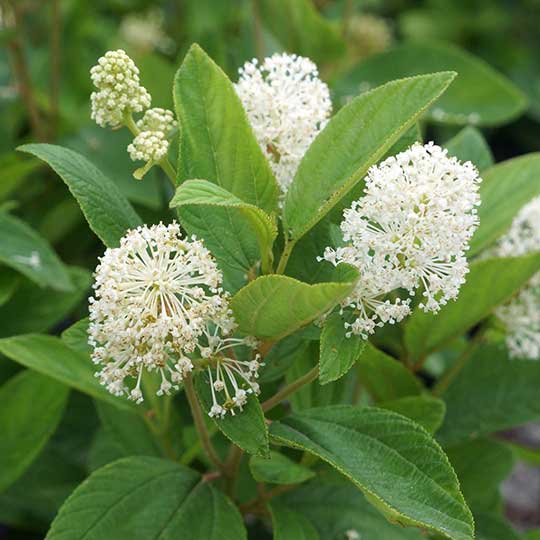
This shrub is hardy in our Zone 5b climate and is a representative selection for Midwest prairies, savannas, and open woodlands. While many ornamental shrubs struggle with the heavy, unyielding clay found throughout the region, the Ceanothus americanus New Jersey tea grows well in it, provided the site is well-drained. It is successful in the open, sun-drenched landscapes of Wildwood, where its incredibly deep and massive red root system can anchor firmly into the earth. In Spring Grove, these plants act as a durable landscape staple, emerging with clean, ovate, and finely-toothed green leaves that remain attractive even during the intense heat and humidity of a Lake County summer.
Size, Spacing, and Growth Habit
Planning for the mounded and compact nature of this shrub ensures it provides the intended structural mass without requiring frequent pruning or encroaching on neighboring perennials:
-
Average Height: Depending on soil conditions and light levels, the plant typically reaches 2 to 3 feet tall.
-
Average Width: Each individual clump forms a sturdy, multi-stemmed footprint spanning 3 to 5 feet wide.
-
Spacing Requirements: To create a low-profile flowering hedge or a continuous drift in a prairie garden, space plants 3 to 4 feet apart. This allows the woody base to expand and the delicate flower clusters to mingle while maintaining enough airflow to keep the interior foliage healthy.
Characteristics of New Jersey Tea
In the North Suburbs, this group of shrubs serves as a source of early-summer color and significant wildlife support, addressing several specific gardening requirements:
-
White "Cloud-Like" Blooms: In June and July, the plant produces cylindrical clusters of tiny, fragrant white flowers on long stalks. This characteristic is commonly utilized to provide a soft, airy texture in the mid-summer garden.
-
Critical Host Plant: Beyond providing nectar, it serves as a host plant for the caterpillars of the Mottled Duskywing butterfly and several species of moths.
-
Deep Root System: The common name refers to the use of its leaves as a tea substitute during the American Revolution, but for the gardener, the most notable feature is the root. The roots are thick, woody, and deep, making the plant exceptionally drought-tolerant once established and effective at preventing soil erosion.
Planting and Maintenance Advice
To ensure your shrub remains healthy and produces a prolific amount of flowers each year, follow these straightforward care steps:
-
Full Sun to Partial Shade: While it is adaptable to dappled light, full sun (at least 6 hours) is required to achieve the densest growth habit and the most abundant floral display.
-
Avoid Transplanting: Due to its deep, woody taproot, Ceanothus americanus New Jersey tea is notoriously difficult to move once it has been in the ground for more than a year. Careful consideration of its permanent location is a functional necessity during the planting phase.
-
Pruning Cycles: The shrub blooms on "new wood" (growth produced in the current season). If you wish to maintain a very tidy, compact shape, you can cut the stems back significantly in late winter or early spring. However, it naturally maintains a mounded form and often requires very little intervention.
-
Soil and Drainage: Proper drainage is the most critical factor for success. While it is adaptable to clay, the plant will not tolerate "wet feet" or stagnant water, which can lead to root rot.
-
Wildlife Protection: Young plants can be susceptible to browsing by rabbits. Using a small wire cage during the first two growing seasons is a practical way to ensure the shrub reaches a size where it can withstand occasional nibbling.
Frequently Asked Questions (Lake County Edition)
Can I actually make tea from the leaves?
Yes. Historically, the leaves were dried and used as a caffeine-free tea substitute. While it was popular during the colonial era, most modern gardeners grow it for its ornamental and ecological benefits rather than culinary use.
Why is my plant slow to grow in the first year?
This is a typical trait of many native prairie plants. New Jersey Tea spends its first few seasons focusing energy on developing its massive root system. Once the roots are established, you will see a significant increase in above-ground growth.
Visit The Country Bumpkin Garden Center
We are located at the corner of Gilmer Rd & Hawley St in Mundelein. Stop by to see the woody structure and clean foliage of Ceanothus americanus New Jersey tea in person and find the right fit for your sun-drenched, low-maintenance landscape. We are a local resource for gardeners across Mundelein, Rondout, and the surrounding communities.
Call (847) 566-2176 or Send a Message to check current availability.
Varieties: New Jersey Tea
See: Shrubs and Roses
Category: Sun Perennials - Sun Plants - Sunny Plants - Shrubs - Deciduous Shrubs - New Jersey Tea near me - Ceanothus americanus - Mountain Snowbell